
MasBrowser
Customer supportLoading messages…
Loading messages…
You are viewing a previous conversation.
Enter to send · Shift + Enter for a new line
Loading messages…
You are viewing a previous conversation.
Enter to send · Shift + Enter for a new line
If you run a TikTok matrix, the phrase you fear most is "0 views".
The content you worked hard to source, edit, and publish sits at zero views hours later — not because the content is bad, but because the account has been shadow-banned. The worse part is the matrix scenario: it is not just one account, but several accounts going silent at the same time, with all content sinking without a trace.
Shadow-banning is different from a ban: a ban means "the account is gone"; a shadow-ban means "the account is still there, but the traffic is gone". For matrix operators who live on traffic, a shadow-ban can be more agonizing than a ban — the account still works, but posting anything is useless.
This article explains TikTok matrix operations thoroughly: how shadow-banning happens, why multiple accounts easily go silent together, how to structure a matrix, how to isolate environments, and how to do traffic-driving safely.
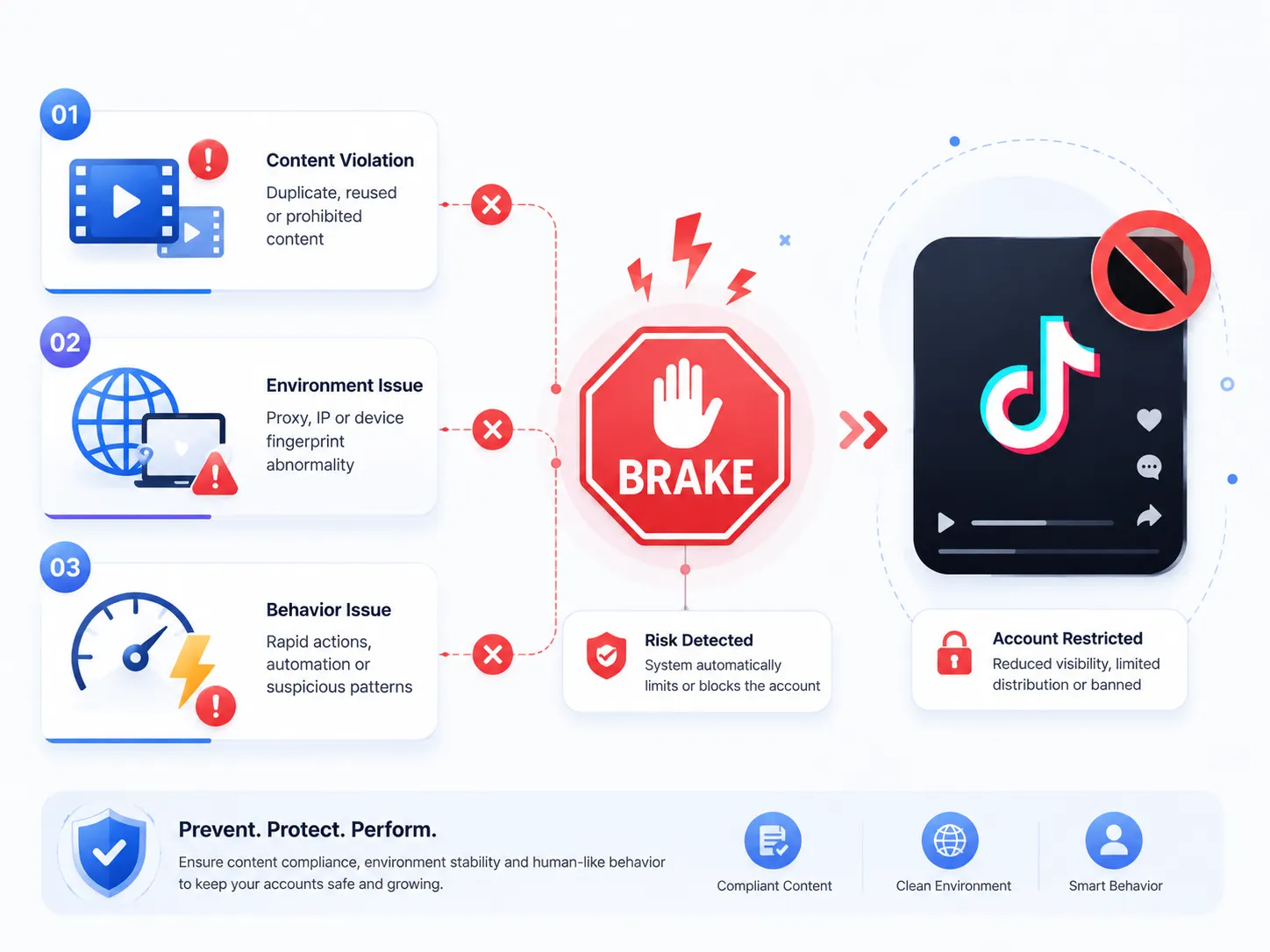
In one sentence: a shadow-ban is the platform's "traffic brake" — when content, environment, or behavior triggers risk control, the algorithm stops allocating exposure to your works.
TikTok's traffic distribution relies on the For You recommendation: a new video is first shown to a small batch of users, and if the data is good, the recommendation pool expands. If the following situations are triggered, the algorithm hits the "brake" directly:
A shadow-ban is not one-off: at the light end, a single video gets no traffic; at the heavy end, the whole account enters an "observation period" and nothing can break through the initial traffic pool. What is more, shadow-bans are "contagious" — when one account is flagged for an environment issue, other accounts in the same environment are demoted along with it.
TikTok shadow-ban mechanism diagram
Because matrices most easily make two mistakes: environment association and content homogeneity — one triggers a shadow-ban, and the others suffer along.
Environment association is the most common: a dozen accounts have all logged in on the same computer and the same IP, and when the platform compares device fingerprints and network characteristics, it directly concludes "these are a group of accounts" and shadow-bans them collectively. This is the same logic as Facebook's account association (how to isolate accounts is explained in detail in Facebook account nurturing, so I will not repeat it here).
Content homogeneity is the second killer: matrix accounts all post the same reposted video, and when the second account posts it, it is flagged as duplicate content; or five accounts have completely identical positioning, so followers see them as the same and they drain each other's traffic while triggering the "content farm" verdict.
When the two problems stack, a matrix is not "1+1>2" but "collective zero".
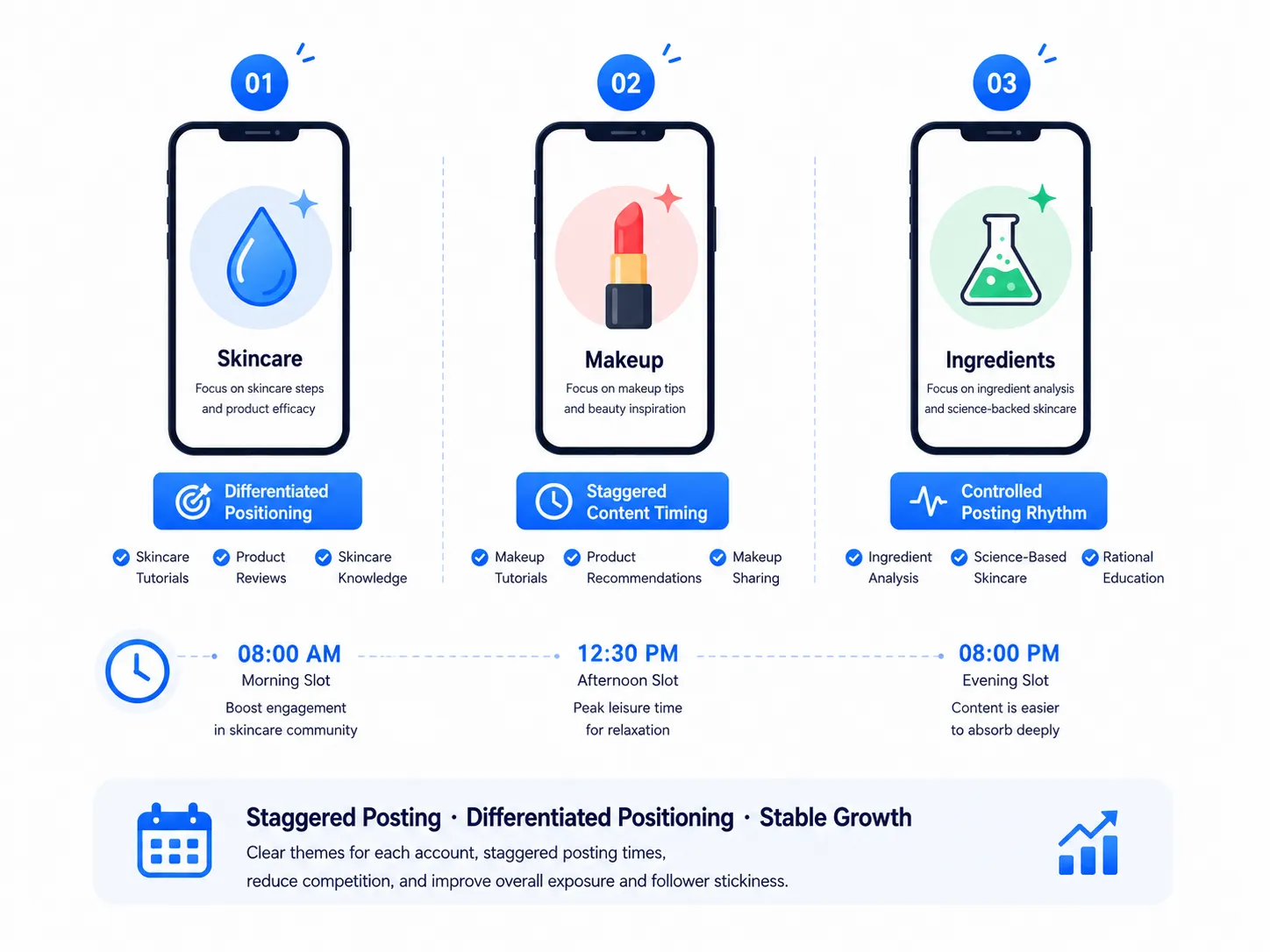
Remember three principles: differentiated positioning, staggered content, and restrained rhythm.
With the right structure, a matrix can actually "cross-promote and spread risk"; with the wrong structure, a matrix is just "putting all eggs in one basket".
How do you build it concretely? A stable small matrix I have seen usually looks like this: taking 3 beauty accounts as an example, Account 1 (tt-us-skincare) focuses on ingredient analysis with a professional angle, targeting women 25+ who care about skincare ingredients; Account 2 (tt-us-makeup) focuses on makeup tutorials, targeting makeup beginners aged 18-28; Account 3 (tt-us-hauls) focuses on shopping hauls and unboxing reviews, taking the product-seeding route. The three accounts share the same source material but edit it differently (the same original footage is cut into three different styles), publishing times are staggered by 2-3 hours, so they do not steal each other's traffic and do not trigger the "content farm" verdict. This "differentiated positioning + staggered content" combination is the foundation for a matrix that does not get shadow-banned.
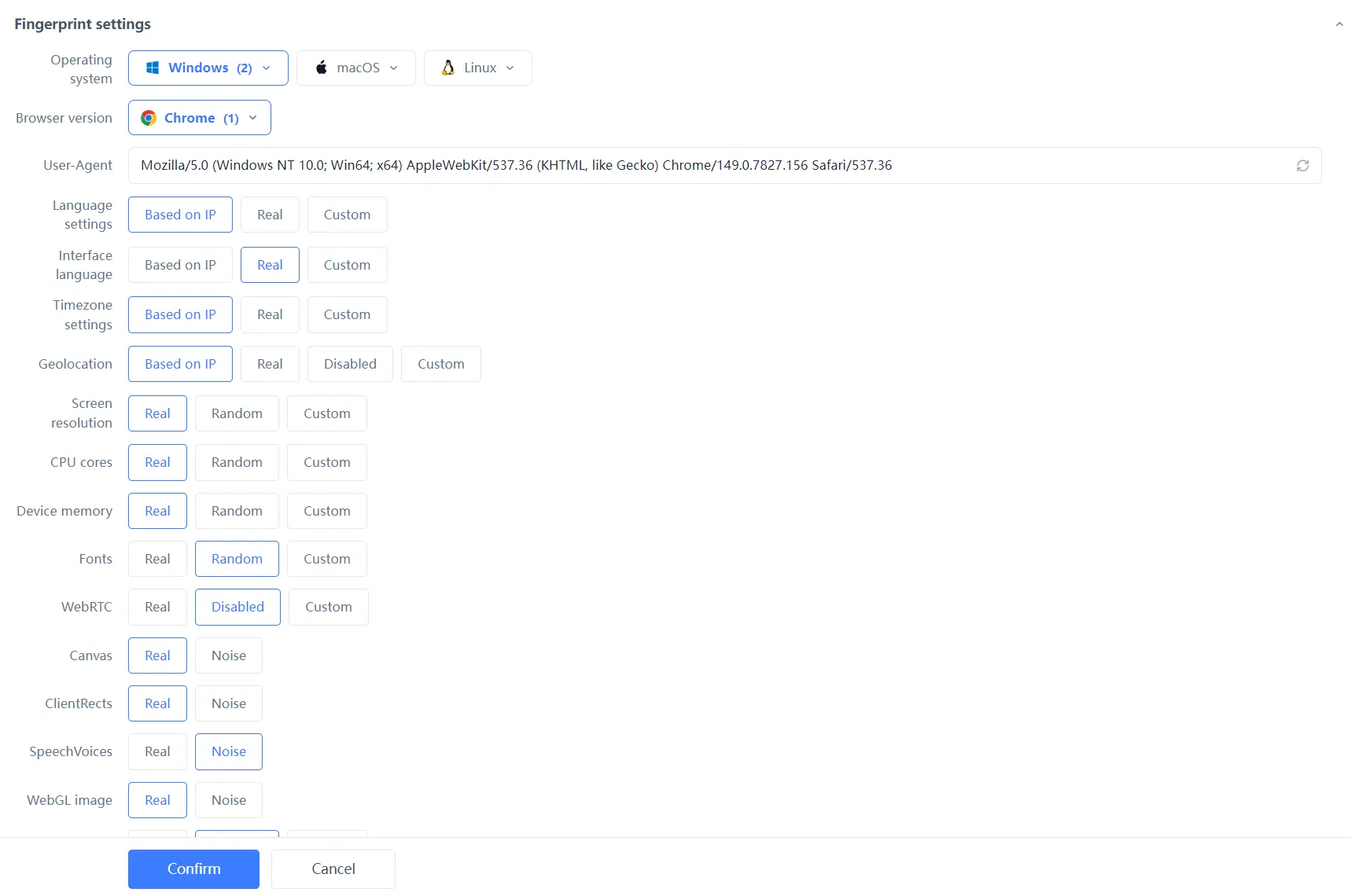
The foundation of a matrix is one account, one environment, one IP: each account has an independent browser environment (independent fingerprint, independent cookies) and an independent network exit, so the platform cannot tell they are a group. Using MasBrowser as an example, here is the concrete workflow:
tt-us-beauty01).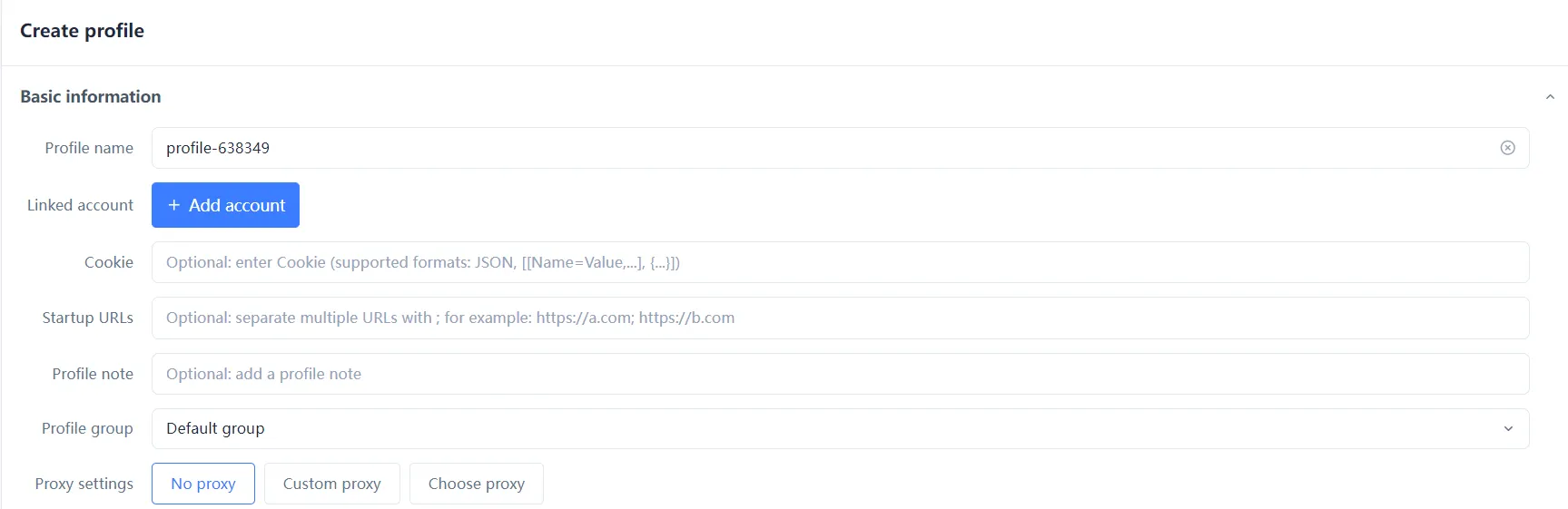
For daily operations, the repetitive "follow, like, comment, upload" actions can be handed to RPA — MasBrowser's RPA flow library includes 4 TikTok templates covering the core matrix scenarios:
Concrete workflow for RPA TikTok tasks:
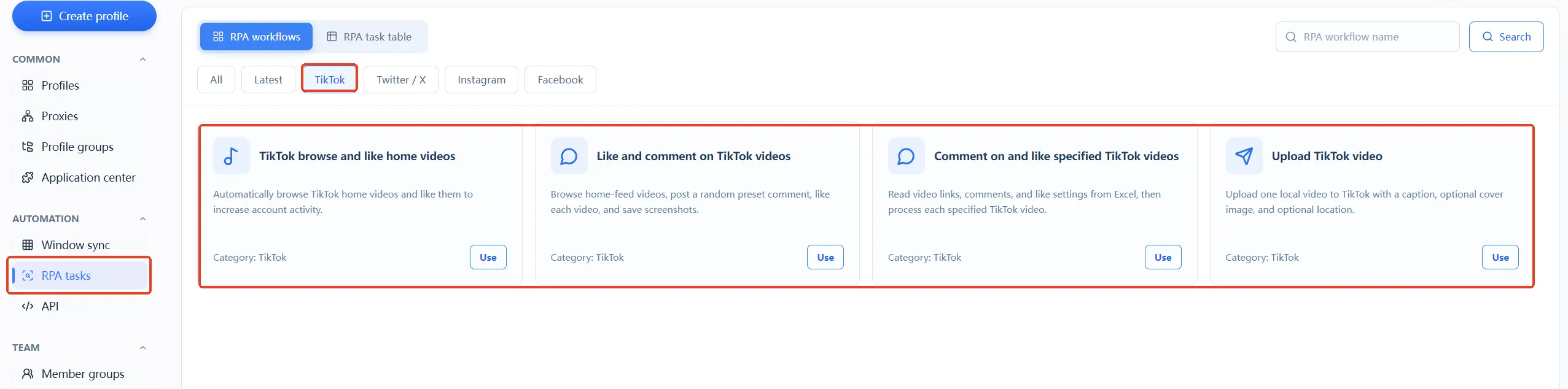
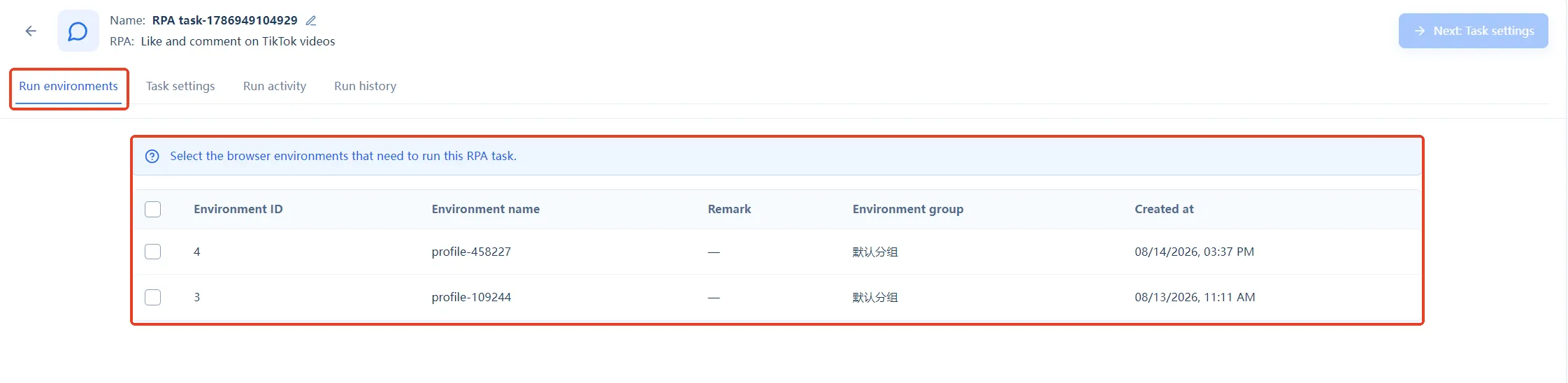
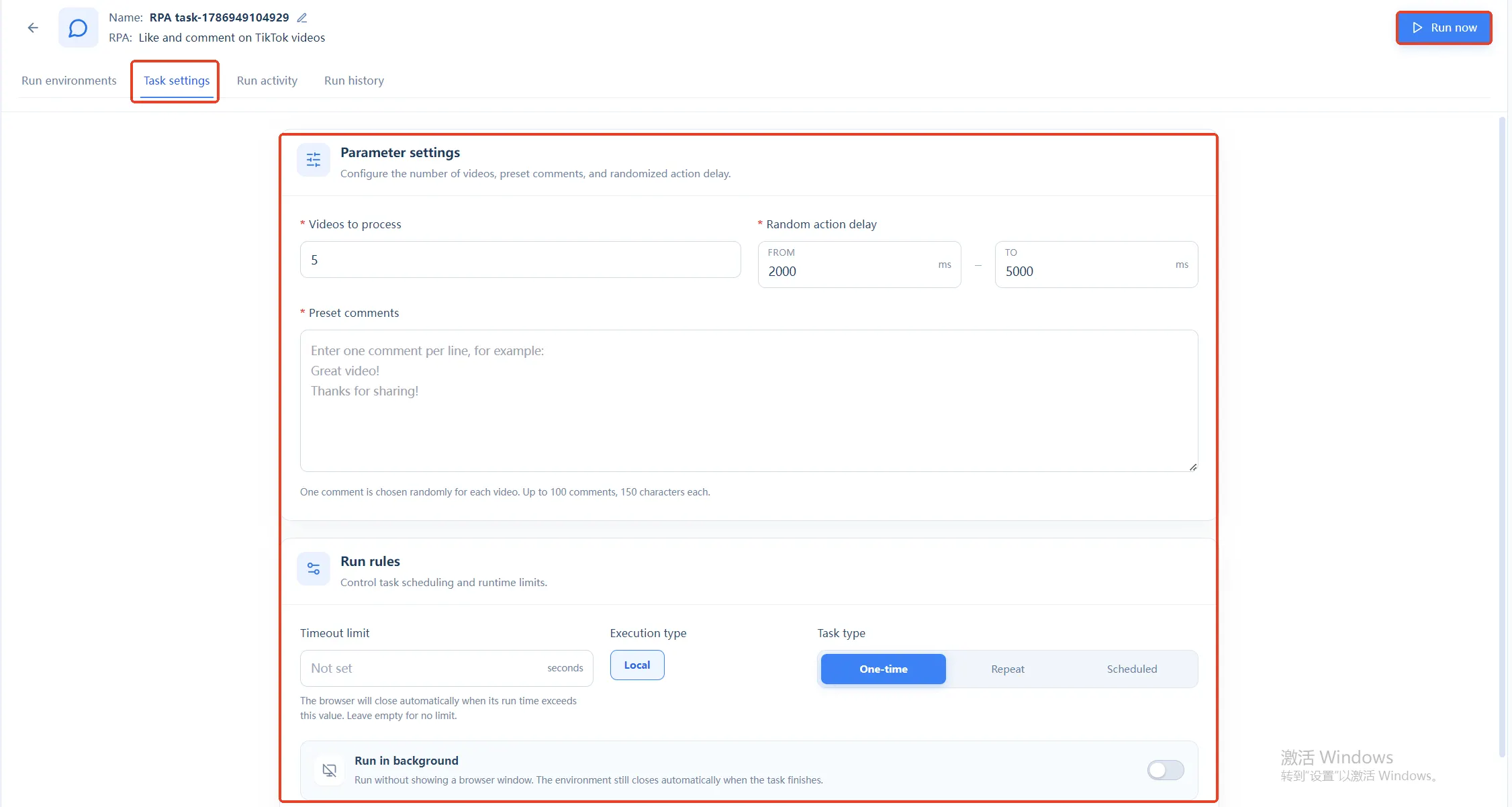
About the Excel template: the Excel file in RPA tasks is a template whose structure follows the field mapping you choose. To batch-reply likes and comments to "mutual like group" accounts, first organize the target video links and comments in Excel, then upload — this step saves dozens of times the effort of commenting one by one.
For complete isolated environment and fingerprint configuration, see the MasBrowser multi-account security management page.
The ultimate goal of a matrix is driving traffic, but traffic-driving is a high-risk zone for shadow-bans. The key to safe traffic-driving is "soft guidance + controlled rhythm":
Remember: traffic-driving is a "slow-boil" game — slow is fast. Rushing to drive traffic before account weight is built up is like walking straight into the line of fire.
Not necessarily. It could be a new account without weight, poor content quality, or posting at a cold time. Wait 24-48 hours first; if views stay at 0, then check whether the content is reposted and whether the account environment is abnormal (frequent IP changes, multiple accounts on the same device).
Yes. The same Wi-Fi means the same network exit — the platform can see "multiple accounts under one IP", and the association verdict triggers directly. Matrix operators must give every account a dedicated IP.
First stop posting for 2-3 days, check and fix the environment (switch to a clean IP, check account bindings), delete content that may violate rules, then resume a normal rhythm (1-2 posts per day) and observe. Recovery takes time — do not rush to post lots of content to "force" it.
One environment per account — build as many environments as you have accounts. The free plan's 2 environment quotas are enough to run the flow with two accounts first; upgrade when you scale up.
The core of a TikTok matrix is not "having many accounts" but "making every account look like an independent person" — isolated environments, differentiated content, and rhythmic behavior. Shadow-bans and bans are both punishments for "not looking like a real person".
Get environment isolation right, stagger content, and restrain traffic-driving, and a matrix can go from "dragging each other down" to "amplifying each other". The free plan already includes 2 environment quotas. Download MasBrowser, create two environments to run a small "differentiated positioning" matrix sample, validate the model, then scale up.