
MasBrowser
Customer supportLoading messages…
Loading messages…
You are viewing a previous conversation.
Enter to send · Shift + Enter for a new line
Loading messages…
You are viewing a previous conversation.
Enter to send · Shift + Enter for a new line
Core takeaway: the self-rescue sequence for an association suspension is completely different from a performance suspension — Amazon officially requires you to appeal and reinstate the "source account" (the policy-violating account yours is linked to) first, before saving your own suspended account; writing a POA for yourself right away is wasted. The investigation therefore splits in two: first figure out who the other account belongs to (your own, a former employee's, or a total stranger's), then check the linking factors one by one. This article follows the official appeal rules to lay out the full path.
People who receive an association suspension notice mostly do one wrong thing first: they reuse a performance-type appeal template to write their own Plan of Action. Association cases work differently — the suspension email never tells you what the linking factor is, and the official multi-account policy explicitly requires dealing with the source account first. Get the order wrong, and no matter how sincere your letter reads, you are burning appeal chances. Below is the sequence as it actually plays out.
Open the suspension email and confirm it is the association type (the official wording is usually "your account is related to an account that may not sell on the platform"):
Once it is confirmed as association type, the official appeal order is single-track: get the source account reinstated first, then appeal your own — and the submission must include the name and date of the source account's reinstatement. So the first investigation step is not checking IPs or fingerprints; it is answering a more fundamental question.
The official appeal framework splits "your relationship with the source account" into three types, each with a completely different rescue path. Match yourself to one first:
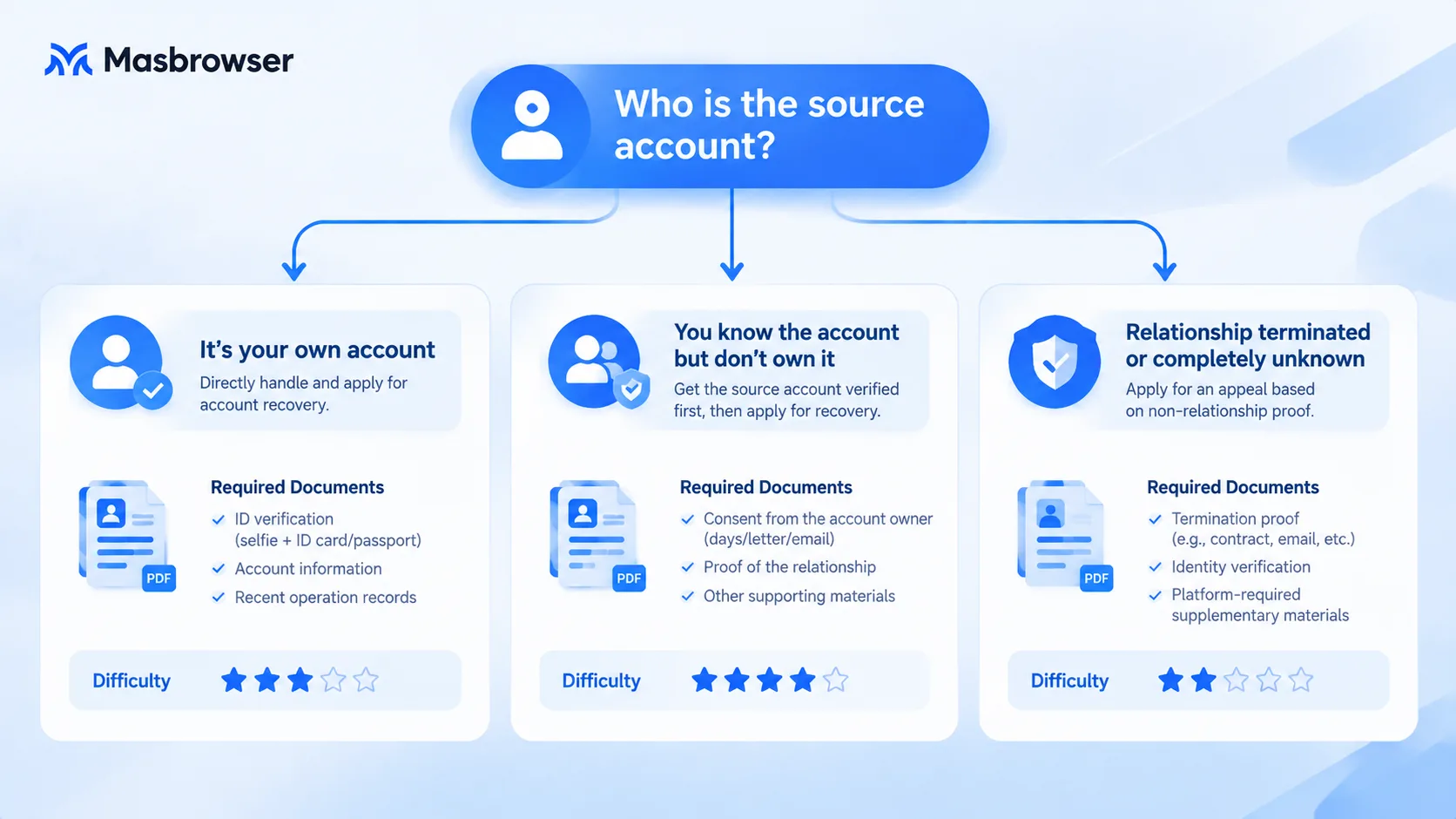 Many sellers stall right at step one — especially with old accounts left behind by runaway registration agencies or dissolved partnerships. If you cannot remember, the next step's factor check will help you work the clues backward.
Amazon does not publish its matching details, but the sources of association sit inside a fixed set of pipelines. Check them one by one, focusing on the intersections between your suspended account and the source account:
While checking, write down the conclusion for every pipeline: mark the time and specifics where there is an intersection, and record "checked, no overlap" where there is none — this log gets used in the appeal later, so do not keep it in your head.
The three official reasons association appeals get rejected are: missing materials, documents that fail to match the linkage, and insufficient explanation of the account-to-account link. Reversed, a qualified package must pass three gates:
The three-paragraph structure of a generic appeal letter (root cause, immediate measures, long-term prevention) applies to association cases too, but the "root cause" here is the relationship and factor explanation, not operating metrics — how the two appeal types differ was laid out by suspension type in the earlier article Amazon suspension self-check and attribution; reading it first saves detours. The mechanics of association matching itself (how the platform compares data) are fully broken down in Amazon multi-store anti-association.
Once the investigation has results, two things happen at once:
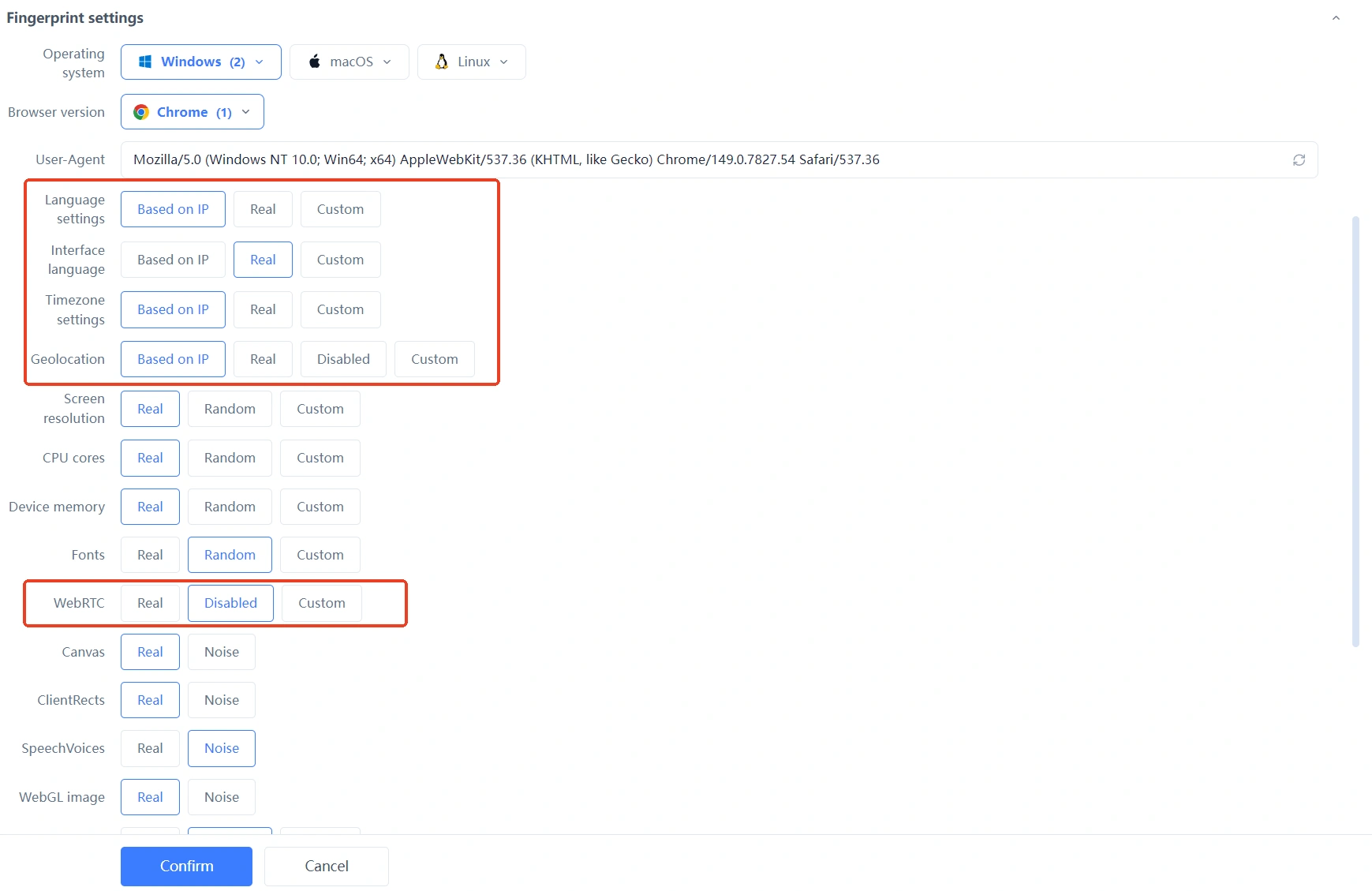 The value of remediation goes beyond this one incident: the investigation log plus the remediation actions are themselves proof material of "independent operation" — if a misjudgment appeal ever becomes necessary, this is the evidence.
Rescuing an association suspension is hard because it tests facts, not writing skills: whether the relationship is clear, the factors are complete, the documents line up. Follow the order "read the notice → determine the relationship → check the factors → prepare materials → remediate and limit damage", and every step has an official rule behind it. Multi-account operators should bookmark this piece — real self-rescue starts with environment isolation before any suspension; investigating only after the notice arrives is always one step too late. For building that isolation, see MasBrowser fingerprint browser; tools start at download MasBrowser.
It depends on whether the source account can be reinstated: if the source revives, your account has a clear path via the standard appeal; if the source is unrecoverable or the account belongs to a stranger, only the misjudgment route remains — far harder. So put your effort into the source account's appeal first, not into repeated letters for your own account.
The officials leave clues in the Account Health page and performance notifications (leading characters of the linked account, the violation reason). Combine them with a timeline: any recent employee departures, ended partnerships, finished registration services? The closer those dates are to the source account's suspension, the stronger the suspicion.
Per the notice's instructions, if no appeal was filed or the appeal failed, after 90 days you can separately request disbursement through the official funds channel, subject to a separate review. Note: if fraud or repeated violations are determined, part or all of the funds may be withheld — which is why lying flat and waiting for a refund instead of appealing is not recommended.
For accounts not yet suspended, yes — cutting intersections immediately is the core of damage control. But be careful with environments of logged-in accounts: drastically altering in-use fingerprints and IPs may trigger fresh verification. The right order is to stabilize existing accounts first; drastic changes belong only to new or rebuilt environments.