How to Nurture Multiple Discord Accounts? Environment Isolation for Community Operations
Anyone running Discord community operations has probably lived this scene: a newly registered account just joined a few servers, hasn't said much, and suddenly "please verify your phone number" pops up; or to operate several brand communities you switch between accounts on the same device, and within days one account asks for reverification — or gets judged a "spam account" and banned, dragging the other accounts on the same device under scrutiny too.
Discord is different from other social platforms: it's not a content platform, it's a community platform — an account's value lies in "which servers it joined, its identity and activity in communities". This article is about environment isolation for nurturing multiple Discord accounts — what Discord's risk control is like, how to lay out a community matrix, and which red lines trigger verification or bans the moment they're touched.
Why Do Multiple Discord Accounts Get "Cascading Bans"? The Risk-Control Logic of a Community Platform
First understand what's special about Discord's association judgment. Other platforms judge by content or account systems; Discord relies on the dual signal of account behavior + device/network, and it's particularly unfriendly to "new accounts":
- Phone verification is a hard gate: Discord requires phone verification for new accounts (especially ones sending DMs or joining servers frequently), and one phone number can only verify one account — multiple accounts verified with the same phone number is Discord's most damning association evidence.
- New accounts have naturally restricted permissions: Discord heavily restricts new accounts — no DMs to non-friends, limited server joins, posting rate limits. This is part of the anti-spam mechanism; new accounts slowly "earn" permissions.
- Device and IP association sensitivity: Discord records an account's login devices and IPs; multiple accounts logging in on the same device and same IP is a core association signal; when Discord bans, it even bans IP ranges — one account gets caught, accounts on the same IP suffer together.
- Community behavior profiling: Discord watches how accounts behave in servers — joining and posting ads immediately, adding a huge number of servers in a short time, DM bombing, all get judged "spam account".
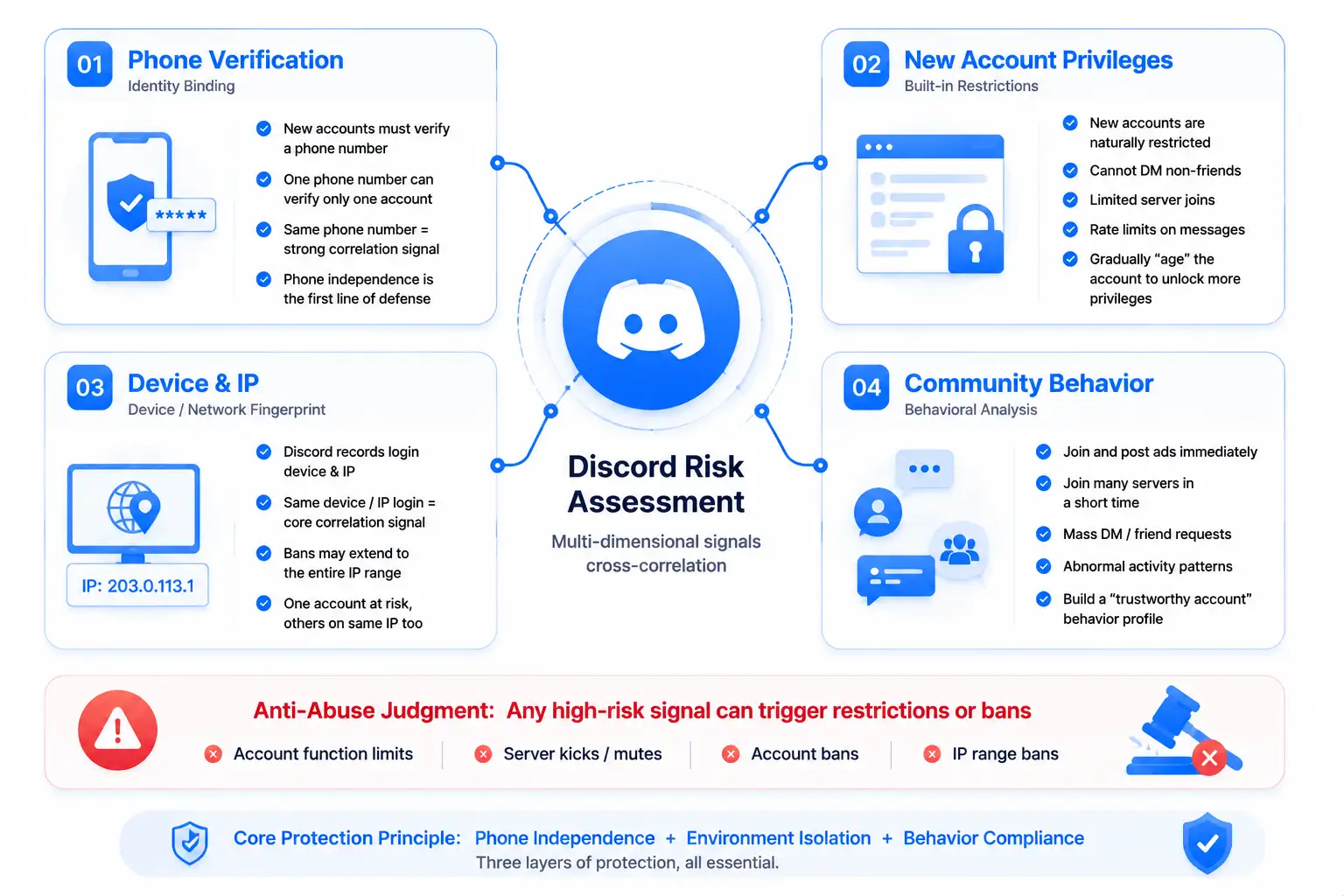 So the biggest difference in Discord multi-account anti-association vs content platforms: phone number + device/IP + community behavior are all hard gates. Independent phone numbers are the first gate, environment isolation the second, and behavior rhythm inside communities the third.
How to Lay Out the Discord Matrix: Community Role Division + Web3 Scenario
Discord matrix layout follows the same position-differentiation logic as content platforms (see the TikTok matrix operation article for layout principles), but Discord has two signature scenarios:
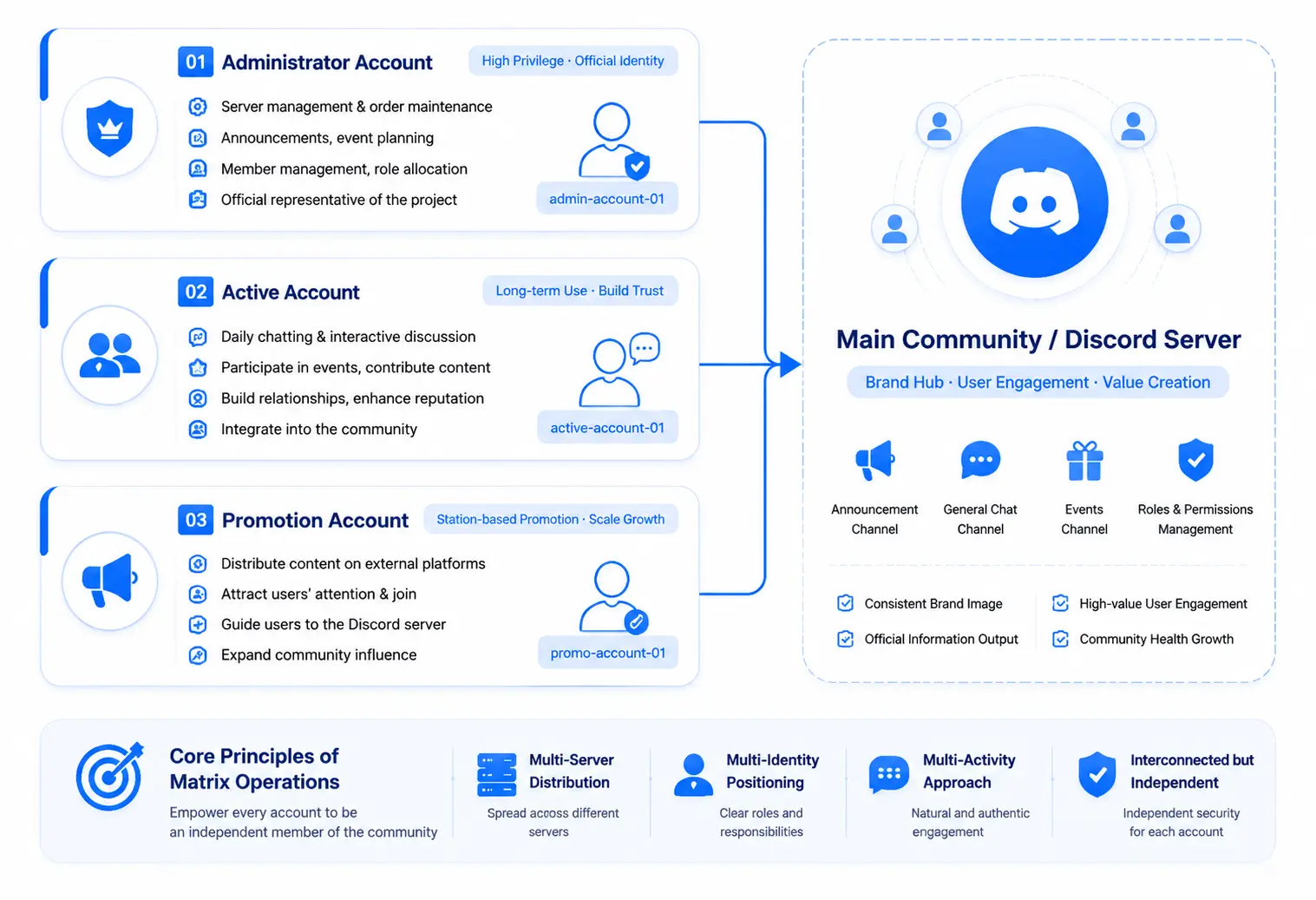
- Divide by "community role": a Discord account's value lies in community identity — main accounts run brand community admin (high permissions, official identity), matrix accounts do community activity and engagement (build identity and levels in target communities), traffic accounts do off-platform funneling (steering users to the main community). The nurturing methods for the three identities are completely different.
- Web3 project communities are the key scenario: Discord is the home turf of crypto project communities, and many projects run community operations through Discord — multi-account Web3 community operations often pair with airdrop interaction (wallet environment isolation is fully covered in the airdrop multi-account interaction article; here we only discuss the account layer), with account, wallet and community identity each independent at three layers.
The essence of the layout is still "making every account look like an independent community member" — different servers, different identities, different activity patterns, looking like a group of people who don't know each other.
Discord Nurturing Red Lines: New-Account Permissions, Server-Join Frequency and DM Limits
Discord's nurturing rhythm is like Facebook — small steps, slow pace (see the Facebook account nurturing anti-ban article for the specific rhythm), but Discord has four signature red lines, crossed means verification or ban:
- Don't rush new accounts into servers: a freshly registered account joining a dozen servers a day is the most typical signal for the anti-spam system — join gradually, start with 1-2 target communities, add more every few days.
- Strict DM limits: Discord restricts new-account DMs heavily (can't DM non-friends, daily DM caps), and a new account DM-bombing directly means verification at best, spam-account judgment at worst. DM funneling waits until the account has "earned" permissions.
- Keep posting frequency restrained: spamming in servers, repeating the same content (especially with links), is judged spam — post with substance and intervals, like a real person chatting, not a machine spamming.
- Posting ads right after joining is a big taboo: a new account posting ad links immediately after joining is one of the fastest ways to get banned — community funneling should be done naturally after building identity.
All four red lines share one logic: Discord judges real people by "community behavior". Real people lurk first, observe, post gradually and interact occasionally; if matrix accounts treat "join-post ads-leave" as a pipeline, it's writing "robot" all over their faces.
How to Build Discord Multi-Account Environments: Independent Phone Numbers Come First
Environment setup follows the same anti-association principles (the full breakdown of environment isolation is in What Is a Fingerprint Browser), but the Discord scenario has three points that matter most:
- One phone number per account: Discord's phone verification is a hard gate, one phone number can only verify one account — prepare the corresponding number of phone numbers before building the matrix; this is the first gate.
- Independent 2FA setup: enable two-step verification (2FA) independently on every Discord account, record authenticators/backup codes separately — this prevents account theft and avoids the association suspicion of "multiple accounts using the same verification method".
- Keep client and web separate: Discord has a desktop client and a web version; matrix accounts should uniformly use the web version (inside an independent browser environment), don't switch accounts back and forth in the desktop client — the desktop client leaves heavier device traces and makes it easier to "slip" into the wrong account.
In one sentence: the focus of Discord environments is "independent phone numbers + independent devices + one unified client" — phone numbers not shared, devices not mixed, client not switched back and forth, and the association signals are cut clean.
Managing the Discord Matrix Environment with MasBrowser
With many accounts, the biggest mess is "which environment goes with which account, which servers it joined, which phone number it's bound to" — mix these up and troubleshooting association becomes a disaster. Taking MasBrowser as an example, here's how I manage a Discord matrix:
- Environment naming = community-purpose-number: name environments "DC-community-purpose" (e.g.
dc-brand-admin-01,dc-active-mem-02), so the environment list shows at a glance which account is the admin identity and which is the active account.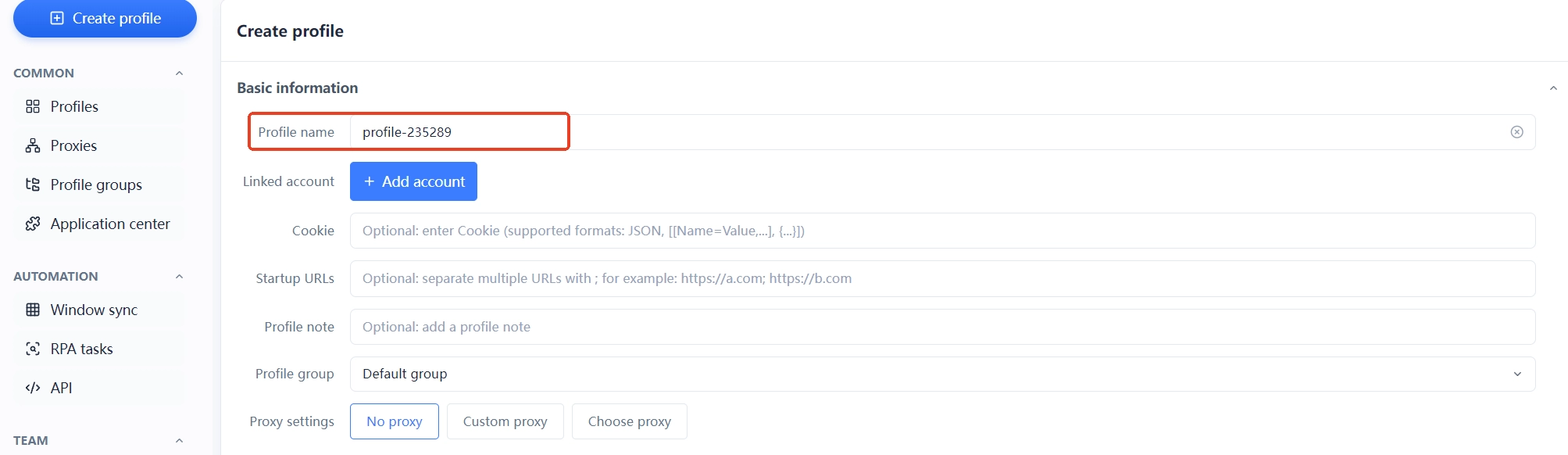
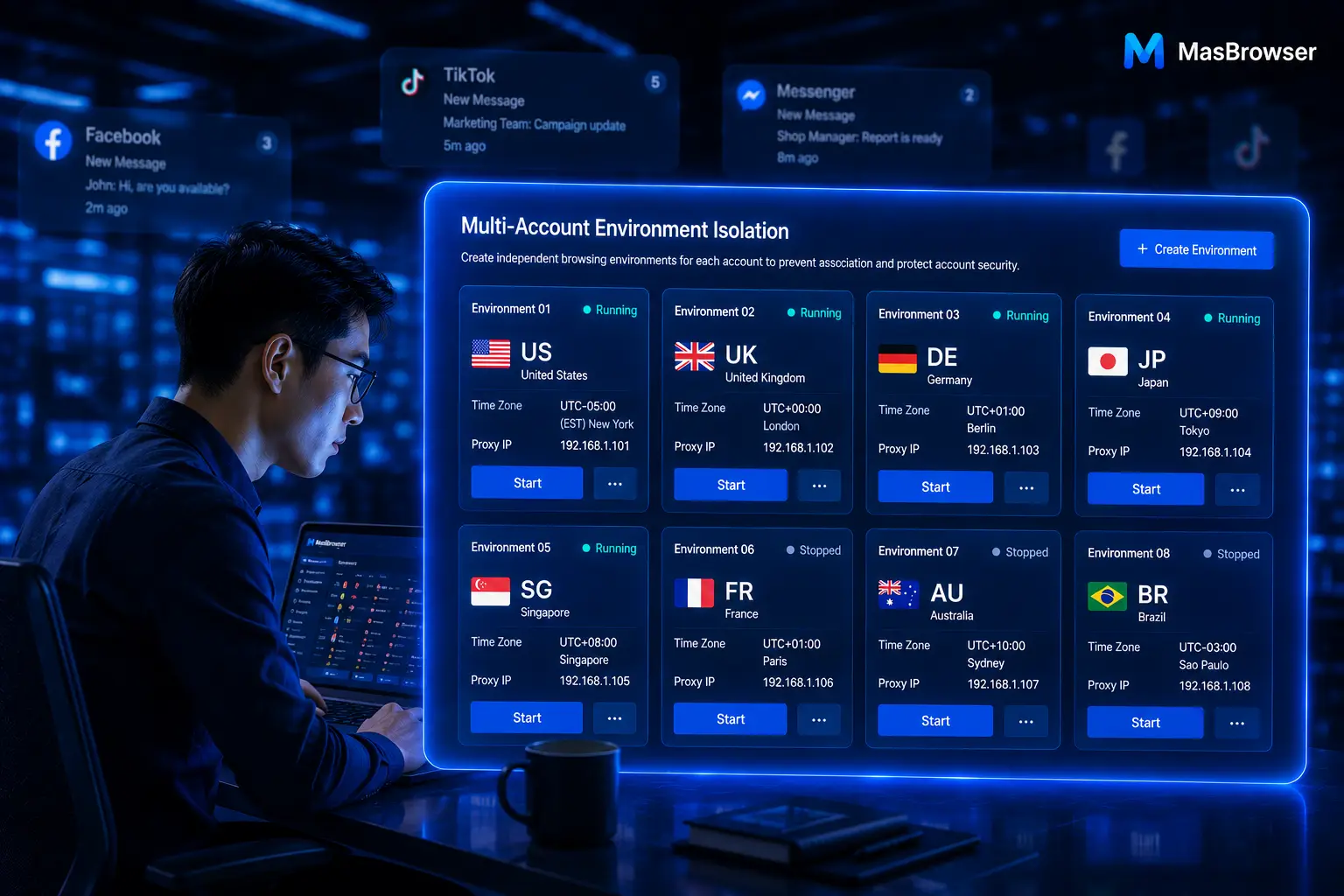
- One environment, one account, one proxy: every Discord account gets an independent environment and independent proxy, accounts invisible to each other — the same-device same-IP signal is cut at the tool level.
- Note phone numbers and servers in remarks: record "which phone number this account is bound to, which servers it joined, what community identity it has" in environment remarks; check this table first when self-auditing association (team collaboration and sharing usage is documented on the environment management page).
- Separate environments by platform: when running Discord plus social media matrices, name and manage environments per platform separately, avoiding "mixed use in one environment" at the tool level.
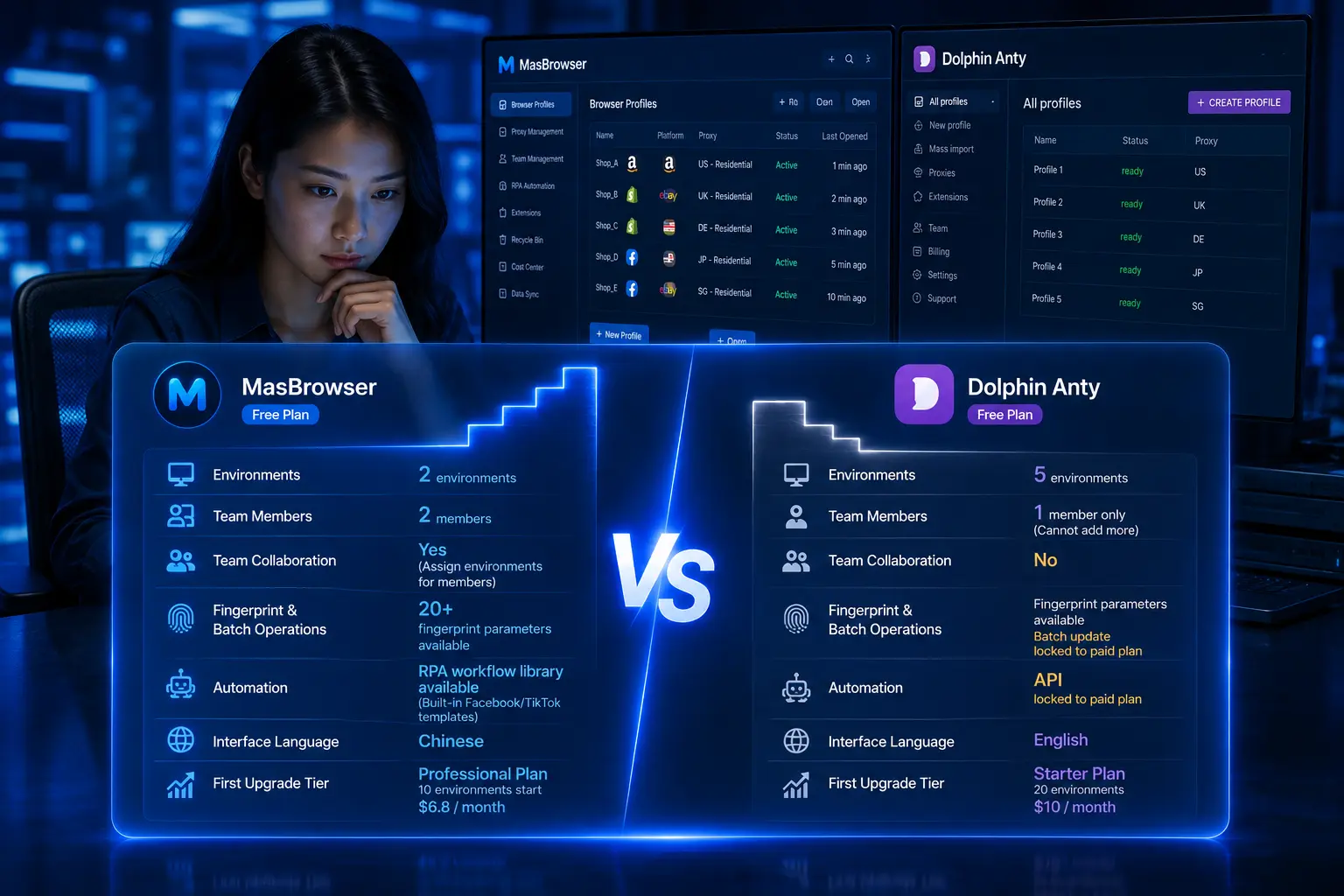
The moat of a Discord matrix is doing independent phone numbers + independent environments + natural community behavior right at the same time. The free plan already includes 2 environment slots — build the first account environment, get the flow working, then replicate step by step.
FAQ
Can multiple Discord accounts use the same phone number for verification?
No. One phone number can only verify one Discord account; multiple accounts verified with the same phone number is damning association. Prepare the corresponding number of phone numbers for the matrix first — this is the most basic prerequisite.
How long does a new Discord account need to nurture before DMing and joining servers normally?
Depends on activity: usually nurture 1-2 weeks first (log in daily, post normally in the servers already joined), then gradually join more servers and DM once the account passes the "newbie phase". Discord doesn't publish a schedule — "permissions gradually unlock" is the gauge; frequent verification requests mean the pace is too fast.
Can matrix accounts join the same server?
Yes, but don't cluster: if several matrix accounts join the same server at once and behave similarly (posting at the same time, liking each other), they get judged associated. Matrix accounts in the same community should stagger join times and interactions, "not knowing each other" by identity.
Can the Discord desktop client log into multiple accounts?
Yes, but it's not recommended for matrices: switching accounts in the desktop client leaves all device traces in one client and makes it easy to "slip" into the wrong account. Matrix accounts should uniformly use the web version in independent browser environments — switching cost and safety are both far better.
Do Discord bans affect accounts on the same IP?
Yes. When Discord bans spam accounts it often bans IP ranges too, and other accounts under the same IP get swept up. So matrix accounts must use independent proxy IPs — if one account gets caught, the others are unaffected.
Conclusion
Nurturing multiple Discord accounts differs most from other platforms in its community nature: an account's value lies in community identity, and risk control centers on phone number, device and community behavior. Prepare independent phone numbers first, then isolate environments, finally manage the rhythm of joining, DMing and posting — get all three right and the matrix can run long-term.
One reminder too: Discord's anti-spam system is very active; community funneling must be "build identity before acting" — accounts that post ads upon joining don't survive three days. Keep independent phone numbers, independent environments and natural community behavior right consistently, and the matrix stays stable. Start from the first account: confirm independent phone number and 2FA first, then give it an independent environment — the free plan's 2 environment slots are enough to start, download MasBrowser and build the first environment.