How to Build an Independent Site Traffic Matrix? Coordinate Social Media Accounts with MasBrowser
Anyone running an independent site (dropshipping or branded e-commerce) probably knows this "traffic anxiety": the site is built, products are listed, but you get only dozens of visitors a day — with no platform traffic pool to fall back on, every drop of traffic has to be attracted by yourself. So many people start doing social media: posting product shots on IG, short videos on TikTok, content on FB, long-form videos on YouTube — and end up with a pile of accounts but traffic that still won't grow: either the accounts work in isolation with no coordination, or the traffic path is a mess and visitors don't know where to go.
The biggest difference between an independent site and a marketplace store is: the marketplace gives you traffic, an independent site gets 100% of its traffic by itself. This article covers how to build an independent site traffic matrix — how to divide and coordinate social media accounts, how to design the traffic path, how to attribute traffic, and what must be watched in multi-account management.
Why Does an Independent Site Need a Traffic Matrix? All Traffic Depends on Yourself
First, understand the essence of independent site traffic. An independent site (Shopify, WordPress, or other self-built sites) has no platform traffic pool — visitors come from only three sources: social media, search, and ads — and social media is the lowest-threshold, fastest-to-scale source (the principle of device isolation is fully explained in the MasBrowser fingerprint browser article; the multi-platform operation scenario works the same way).
Teams doing independent site traffic almost all use anti-detect browsers like MasBrowser to manage multi-platform accounts — these tools essentially reverse browser fingerprinting, giving each platform's accounts an independent device profile. But tools are just the foundation; what really decides traffic is the matrix's coordination design:
- One platform, one account = low ceiling: a single IG account's reach is limited, and traffic hits a ceiling easily.
- Multi-platform, multi-account = needs coordination: it's not "the more accounts, the better," but "each platform handles its own stage and drives traffic to the others" — that's the traffic matrix.
So the core of an independent site traffic matrix is not "how many accounts to open," but letting each platform's accounts play their role in the traffic funnel.
How to Build the Traffic Matrix: Three-Layer Funnel + Platform Division
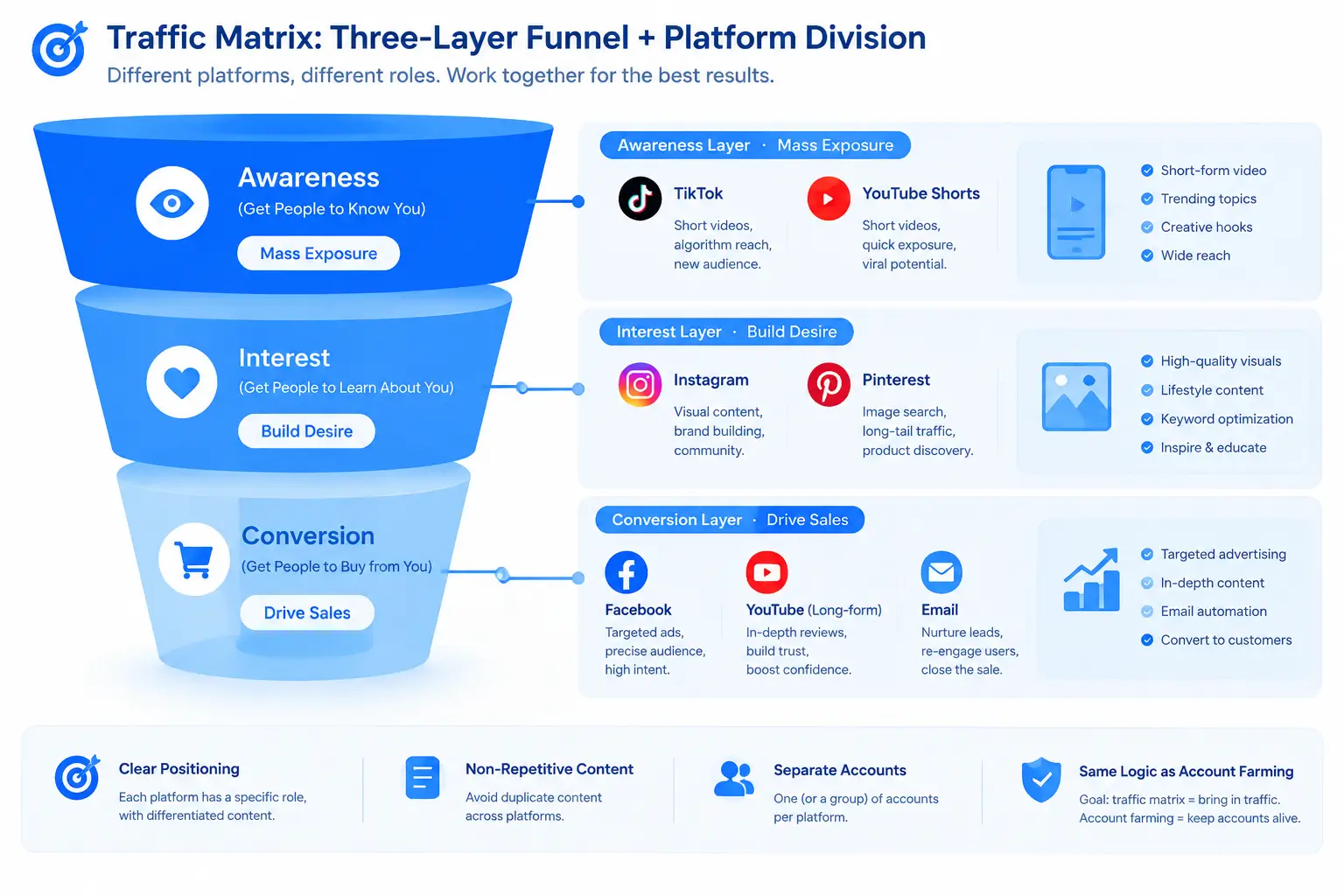
The skeleton of an independent site traffic matrix is a "three-layer funnel + platform division" — each platform plays a different role in the funnel with a different content format:
- Awareness layer (make people know you): TikTok + YouTube Shorts handle "viral volume" — short-video algorithm recommendations quickly reach new audiences and let strangers see your product for the first time (the methodology for TikTok matrix operation is fully explained in the TikTok matrix operation article).
- Interest layer (make people understand you): IG + Pinterest handle "seeding" — IG's visual content builds brand tone, Pinterest's image search brings precise long-tail traffic, letting interested people learn more about the product.
- Conversion layer (make people buy you): FB + YouTube long-form videos + email handle "conversion" — FB's precise audience targeting and YouTube's in-depth reviews build trust, turning interest into orders.
Each platform has one (or one group of) accounts, with clear positioning and non-duplicated content between accounts — this follows the same "positioning differentiation" logic as nurturing accounts across platforms (the methodology for multi-account nurturing and ban prevention is fully explained in the multi-account nurturing article). The difference between a traffic matrix and a nurturing matrix: nurturing is "keeping accounts alive," traffic is "making accounts bring traffic."
How to Implement Multi-Account Coordination: Link in Bio + Traffic Attribution
Once the matrix is built, how do you make traffic actually flow to the independent site? Three implementation points:
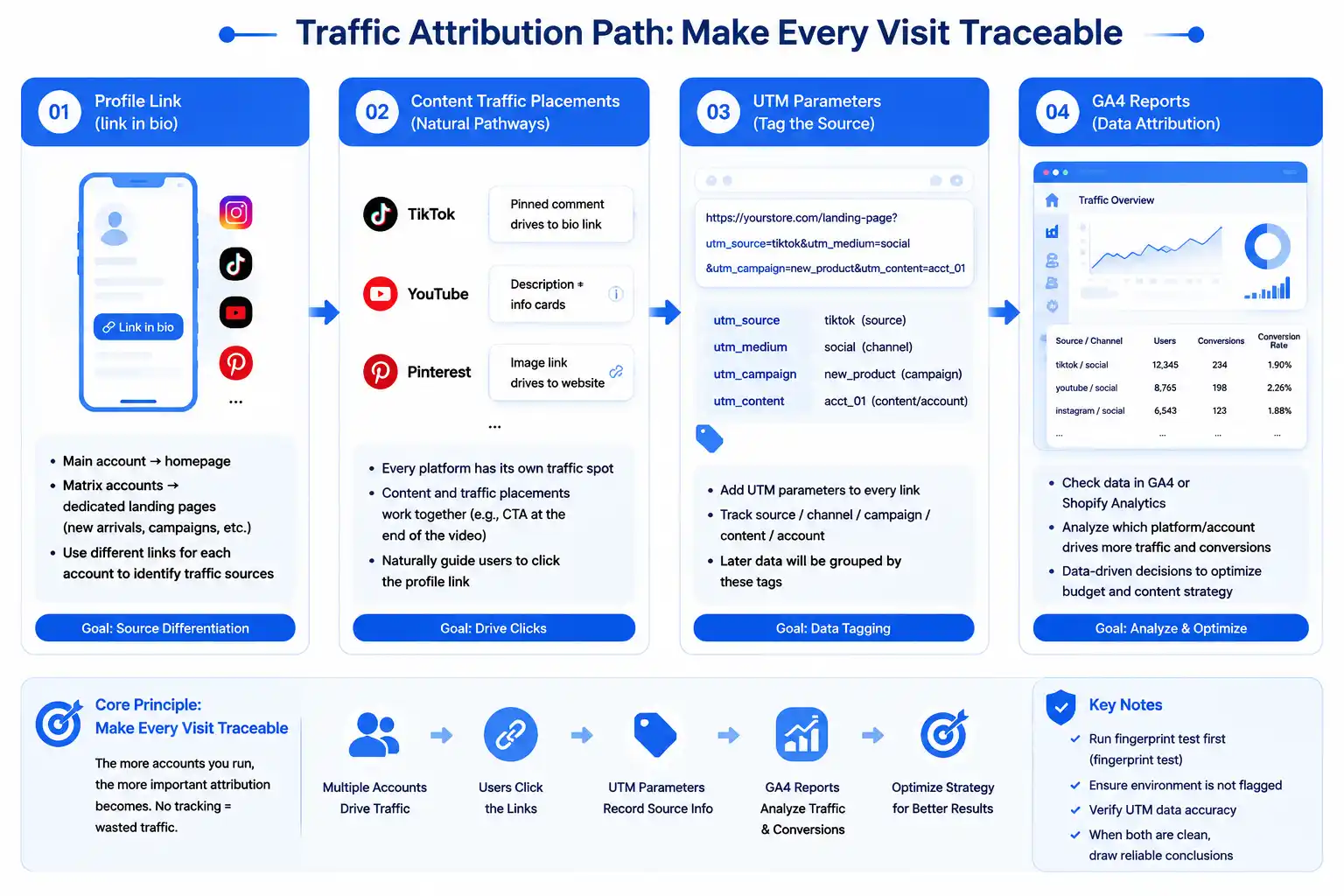
- Link in bio strategy: IG/TikTok link in bio is the main entry for driving traffic — the main account links to the site homepage, matrix accounts link to dedicated landing pages (new product pages, campaign pages); don't have all accounts link to the same URL, so traffic sources are easy to distinguish.
- Naturally embed paths in content: TikTok pinned comments, YouTube descriptions and info cards, Pinterest image links — each platform has its own traffic positions, and content must cooperate with them (end videos with "click the link in bio").
- UTM parameters for attribution: put UTM parameters (source/channel/content) on each platform account's links, and the independent site backend (GA4 or Shopify Analytics) can tell which platform and which account brought how many conversions — traffic without attribution is traffic wasted; you can't know which channel to double down on.
The core of the three implementation points is "every traffic source is trackable": the more accounts, the more important attribution becomes — otherwise ten accounts are driving traffic but you don't know which one it came from (when troubleshooting attribution, first run a fingerprint test to confirm the environment hasn't been flagged by the platform, then check the UTM data — only draw conclusions when both steps are clean).
Traffic Red Lines: Platform Link Restrictions and Over-Draining
The most common failure in traffic matrix operations is "driving traffic too aggressively and getting restricted by platforms":
- Platform external-link rules differ: IG only supports external links on the profile and stories, and posting links in comments tends to throttle the account; TikTok's bio link has platform rules, and mass link posting in comments gets flagged as spam; YouTube info cards and descriptions are the legitimate traffic positions — follow each platform's rules for driving traffic, don't "use one template for all platforms."
- Over-draining leads to demotion: posting lots of "click my profile link" content in a short time, spamming links in comments, and DM bombing to redirect traffic get flagged as "spam marketing" by platforms — driving traffic must be paired with content (give value first, then guide), not just yelling "come buy."
- Watch platform differences when reusing creatives: adapt the same asset when posting to multiple platforms (vertical/horizontal, duration, copy tone) — don't "copy one video to all platforms" — it can be flagged as duplicate content and doesn't match each platform's vibe.
Behind the three red lines is one logic: traffic is a combination of "content + path" — content provides value, paths guide naturally, and hard-sell traffic doesn't survive long on any platform.
Managing the Traffic Matrix Environment with MasBrowser
The number of accounts in a traffic matrix is usually "platforms × accounts per platform" — a dozen or more accounts is common, and it falls apart if environment management lags. Take MasBrowser as an example:
- Environment naming = platform-role-market: name environments by "platform-funnel role" (e.g.
ig-seed-us,tt-boom-us,yt-review-us), and the environment list instantly shows each account's role in the funnel — who does seeding, who does conversion, all clear.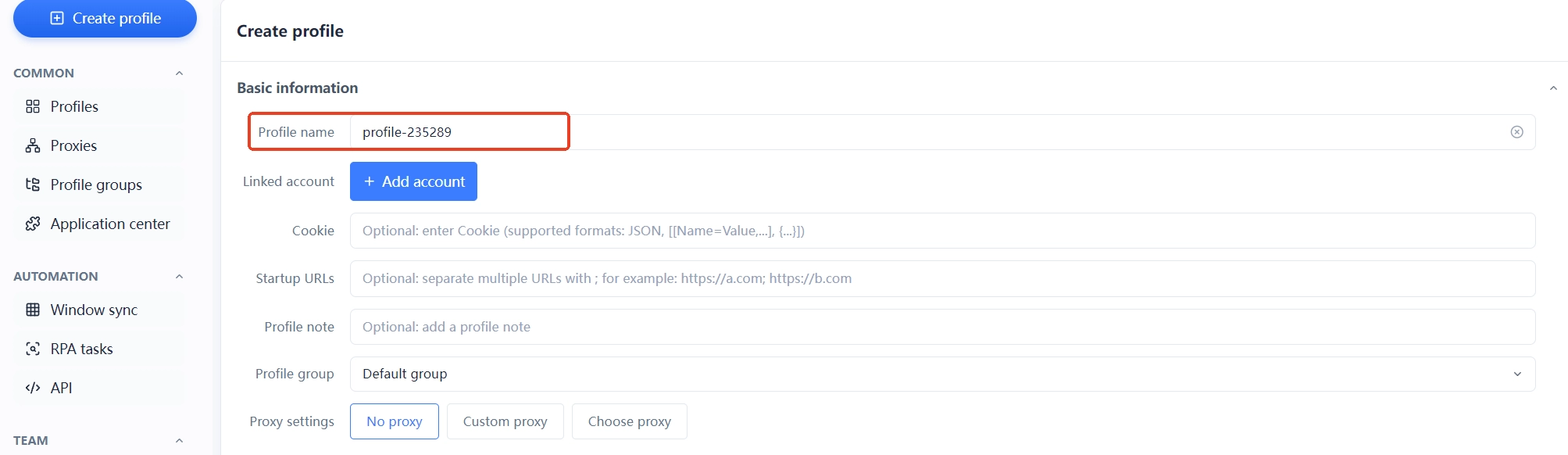
- One platform, one environment, one proxy: each platform's accounts have an independent environment and an independent proxy (matching the target market), so platforms are invisible to each other — device- and IP-level association is cut off at the tool layer, and accounts don't interfere with each other.

- Record traffic positions and UTM in notes: write down in the environment notes which link in bio, UTM parameters, and traffic position belong to each account, and check this table first when troubleshooting attribution (team collaboration and sharing usage is described on the multi-account management page).
- Separate multi-business environments: traffic matrix + e-commerce store + ad accounts separately named and managed — business dimensions don't mix, and troubleshooting association stays clean.
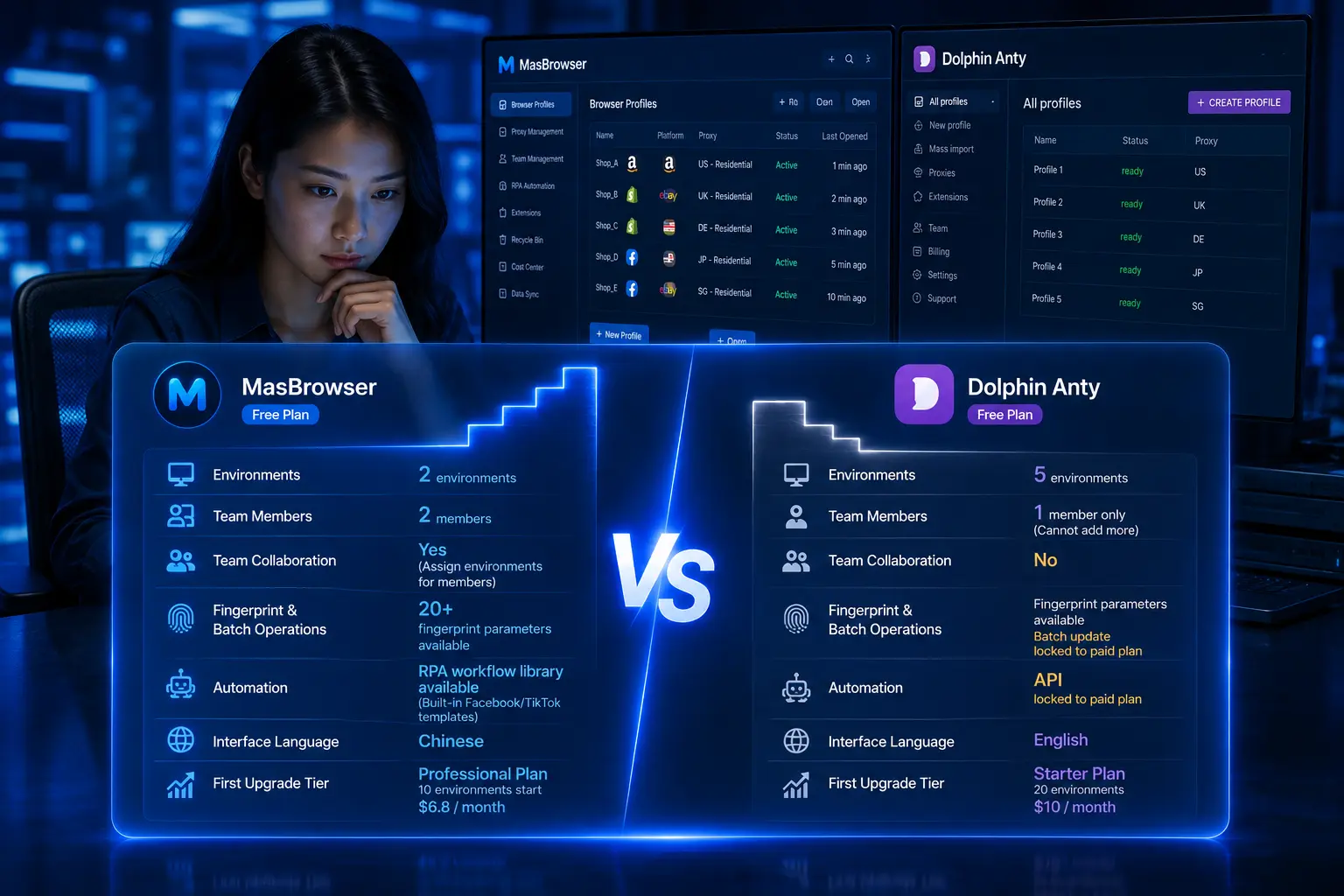
The moat of a traffic matrix is doing clear funnel division + attributable traffic + independent environments all at once. The free plan already includes 2 environment slots — set up the environments for your first group of traffic accounts, run the flow through, then replicate step by step.
FAQ
Which platform should an independent site use first for traffic?
It depends on the category and target audience: impulsive/visual categories (apparel, home, beauty) start with IG + TikTok; decision-heavy/high-ticket (3C, outdoor, tools) start with YouTube + Pinterest. Don't spread across all platforms at once — first get one platform's traffic path working, then replicate.
How many accounts does a traffic matrix need?
There's no standard answer; I recommend starting with "1-2 accounts per platform": the main account does brand content, matrix accounts do test content (test different content styles to gather data), and add accounts on platforms that perform. Account count is not the key — clear attribution is the key.
How do I know which account brought the traffic?
Use UTM parameters: put utm_source (platform) + utm_medium (account/content type) on each platform account's links, and the independent site backend (GA4/Shopify Analytics) can view conversions by source — with attribution in place, you know which account deserves more investment.
Can traffic accounts be flagged as "marketing accounts" by platforms?
Yes, if "draining exceeds content": mass posting ad content in a short time, spamming links in comments, and DM bombing are all flagged as spam marketing. The fix: create value content first (tutorials, reviews, useful tips), then guide naturally — keep the "content:traffic" ratio at least 7:3.
Does a traffic matrix need an independent environment for every account?
Yes. If a dozen accounts share devices/IPs and get flagged as associated, the chain reaction is "the whole traffic system collapses." Use a fingerprint browser to give each platform account an independent environment so accounts don't implicate each other — run a fingerprint check on each environment to confirm the fingerprint profiles are independent; one account having problems doesn't affect the whole matrix.
Conclusion
An independent site traffic matrix is a systematic project of "social media multi-account coordination + attribution": funnel division lets each platform play its role, UTM attribution makes traffic trackable, and environment independence prevents the matrix from being implicated as a whole — do all three right, and independent site traffic turns from "anxiety" into "an asset that can grow."
One reminder: traffic is a long game, don't expect "a few days of posting and you're sold out" — first get one platform's traffic path working, then gradually spread the matrix; attributable traffic and independent environments are the premise for scaling. Start with the first group of accounts: design the funnel division and UTM attribution first, then give each account an independent environment — the free plan's 2 environment slots are enough to get started. Download MasBrowser and set up the first environment.