
MasBrowser
Customer supportLoading messages…
Loading messages…
You are viewing a previous conversation.
Enter to send · Shift + Enter for a new line
Loading messages…
You are viewing a previous conversation.
Enter to send · Shift + Enter for a new line
If you work in cross-border e-commerce, you have probably experienced this "growing pain": the first store just started showing results, you want to replicate a second, a third... and before the accounts are even nurtured, the platform flags them as associated, and you are back to square one overnight.
I have seen too many sellers fall into "opening stores while learning on the job" — a pile of accounts opened, but the anti-association homework never kept up, and when problems hit, a whole batch went down together.
Multi-account operations are not "the more stores, the better" — it is a systematic project from planning to scaling. This article explains the complete chain: how to plan accounts, how to lay the foundation during the setup phase, how to survive the nurturing phase, how to scale without losing control, and how to manage risk daily.
Three-stage route example diagram
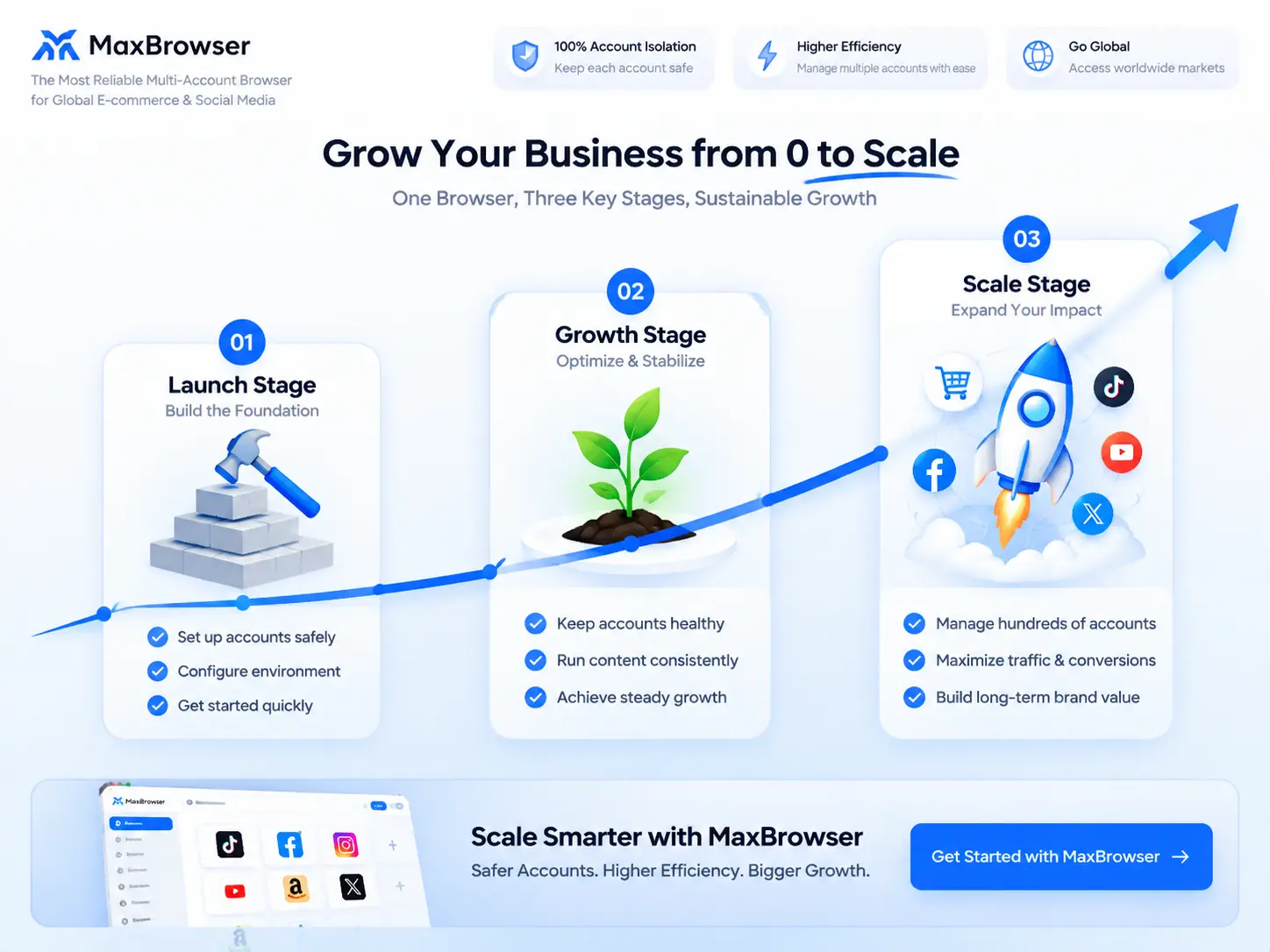
In one sentence: the first step of multi-account is not "opening accounts" but "drawing a map" — break down platforms, regions, and business lines first, then decide how many accounts to open and under which subjects.
Before opening accounts, answer three questions:
The planning principle is "fewer but stable": if one subject can solve it, do not use three; enough accounts is fine — the more accounts, the greater the management cost and exposure surface.
Account matrix planning diagram
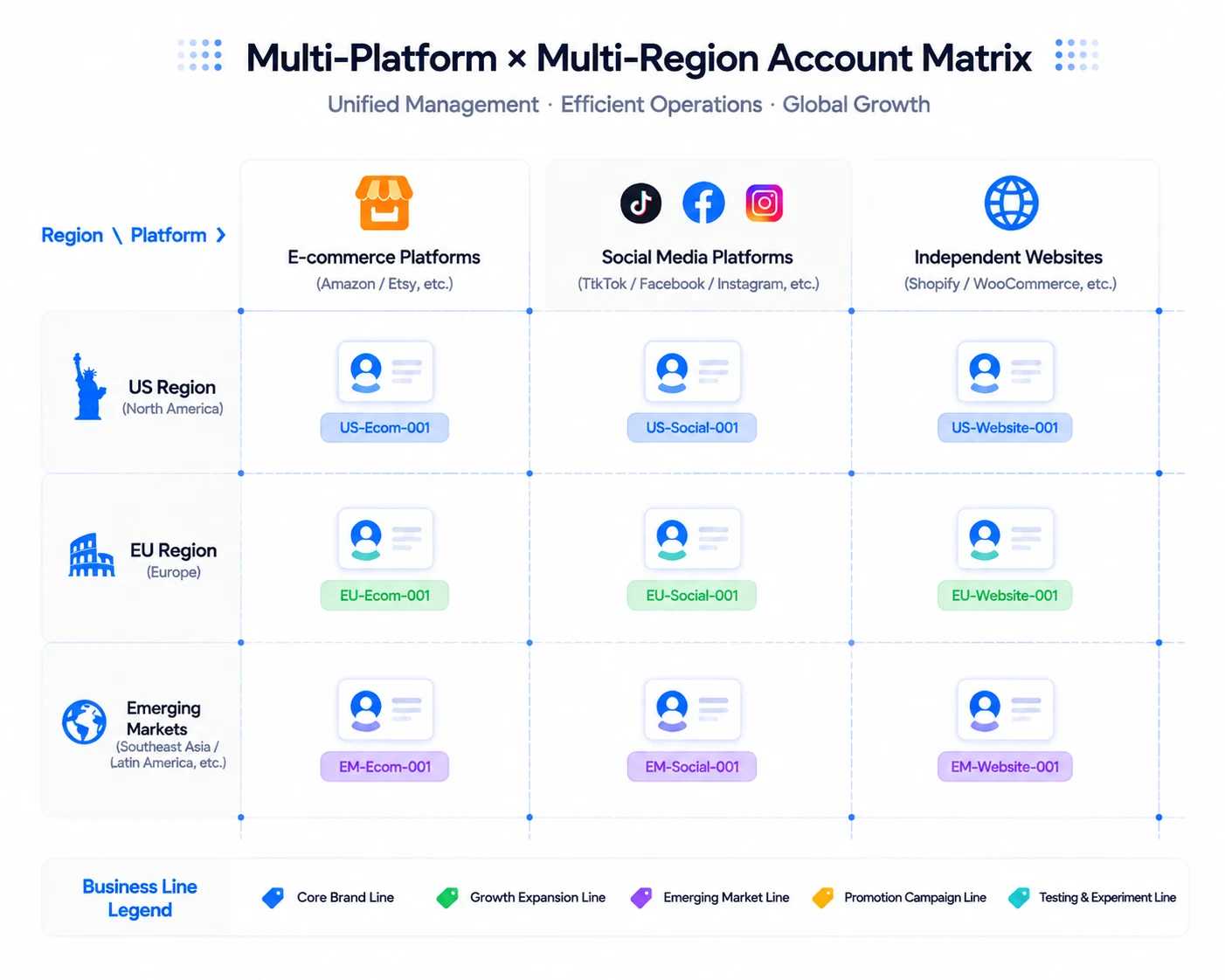
The most important thing in the setup phase is not "hurrying to open the store", but preparing the anti-association "four essentials" before registration — environment, IP, payout, and registration info.
The general workflow for the four essentials (the complete implementation of one store, one environment, one IP, one payout) has detailed steps in Amazon multi-store anti-association — not repeated here. In the setup phase, just remember one principle: all isolation must be completed before registration — "isolate first, register second".
In the lifecycle of a new account, the first 2-4 weeks are the highest-risk window — platforms give new accounts low trust by default, and any aggressive behavior gets amplified. Take Amazon as an example: a new seller's Account Health in the first 90 days directly affects store privileges, and falling into the "danger zone" means a lengthy appeal process; the same applies to eBay and standalone sites — early rhythm determines account weight. The nurturing phase comes down to three things:
The core of the nurturing phase is "making the account look like it is operating normally" — the platform already has low trust in new accounts, and any aggressive behavior gets amplified.
After the account count passes 10, the human brain can no longer track "which environment is bound to which proxy, which payout set, and who is responsible" — the biggest enemy in the scaling phase is not platform risk control but management losing control.
Three things to do in the scaling phase:
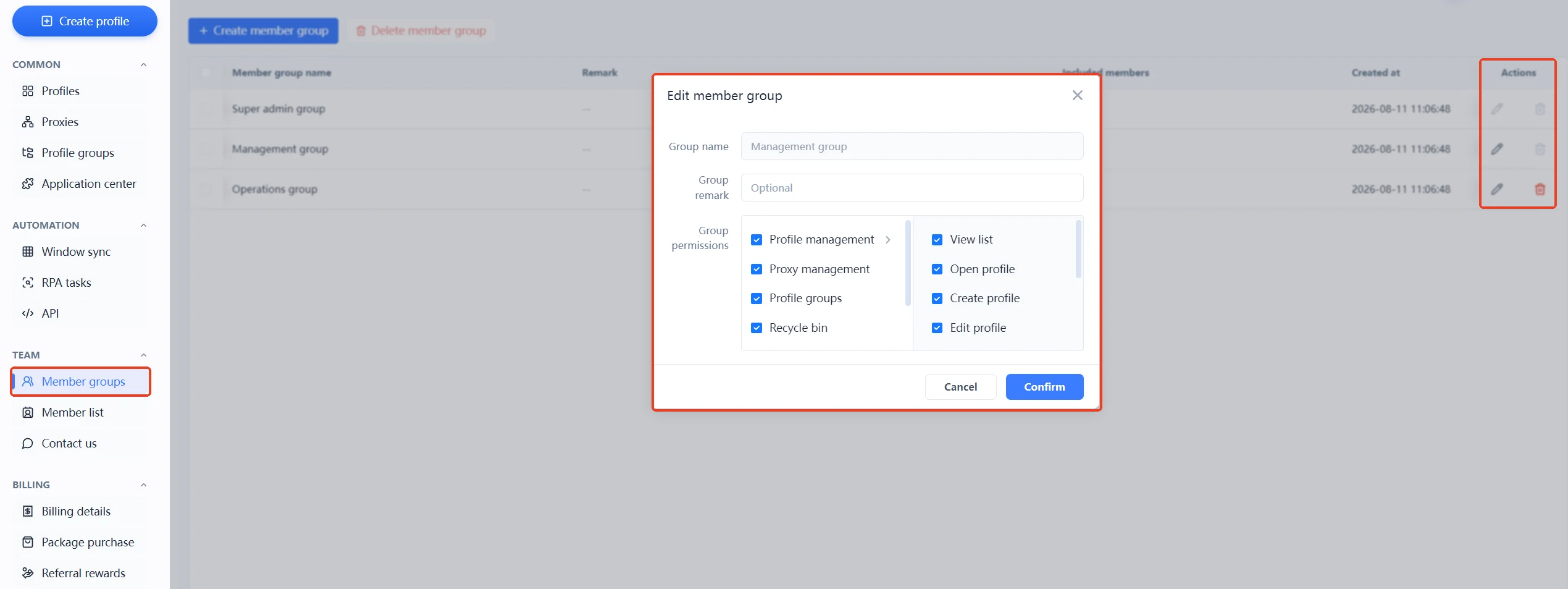
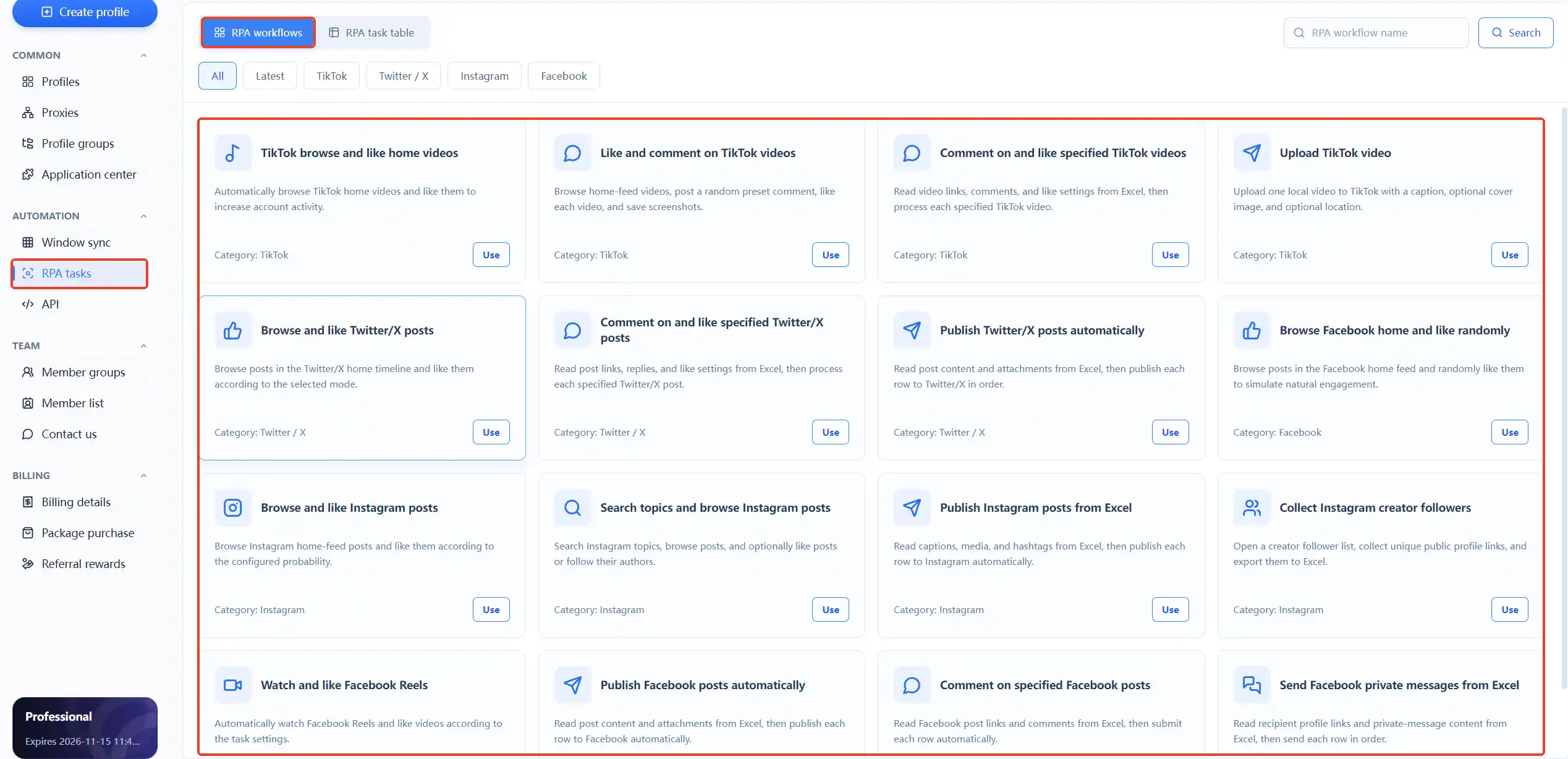
The logic of the scaling phase is "use tools to manage scale": environment grouping, permission assignment, and automation let the account count grow without the management complexity exploding.
In the long run, the number one reason multi-account operations flip over is not platform risk-control upgrades but internal management disorder — a ledger, monitoring, and contingency, all three indispensable.
Remember: the moat of multi-account operations is not "many accounts" but "orderly management" — a clear ledger, early anomaly detection, and a plan in hand keep accounts stable as they grow.
It is recommended to start with 2-3 accounts: first run through the complete "four essentials + nurturing" flow, verify the model works, then increase gradually. Opening dozens of accounts at once makes management and risk control easy to spiral out of control.
Not recommended. Accounts on different platforms sharing an environment (same fingerprint, same IP) is like connecting the association across platforms — when one platform has a problem, the other suffers too. Splitting environments by "platform + account" is the safest.
Not necessarily. First check the severity: if it is just demotion for observation, correcting the environment may restore it; if it is a clear association determination, cut losses in time and rebuild a new account instead of repeatedly struggling on the original one.
With few accounts (single digits), self-management is fine; with many accounts (double digits), it is recommended to have at least a clear ledger and a fixed check rhythm, and ideally a dedicated person — "management disorder" is the most common reason multi-account operations flip over.
No. A fingerprint browser solves the "device identity" dimension — each account gets an independent fingerprint and environment, so the platform cannot link accounts at the device level; but "human dimensions" like shared payouts, reused registration info, and shared IPs still require operators to isolate them. The tool manages environments; people manage info and funds — together they form a complete anti-association solution.
It varies: eBay has an official multi-account policy (linked above), Amazon in principle prohibits the same entity from registering multiple accounts, and Shopify allows multiple stores but requires independent operation (terms of service). Before running multiple accounts, confirm the target platform's official policy and your own compliance — do not turn "multi-account" itself into a violation.
Cross-border multi-account anti-association is not as simple as "buy a tool, open accounts" — it is a complete lifecycle management: lay the foundation in the setup phase, stabilize the rhythm in the nurturing phase, use tools to manage scale in the scaling phase, and keep a ledger and contingency plans daily.
Each phase has its own pitfalls, but the core logic runs through everything — make every account look like "an independent person operating independently". The free plan already includes 2 environment quotas. Download MasBrowser, first use two accounts to run through the complete "setup → nurture" flow, verify the model, then talk about scaling.