How to Nurture a New TikTok Account? The Full Cold-Start Route
Register a batch of new TikTok accounts, post videos the same day, attach links, drive traffic — the fate of this batch is basically preordained: either views stay in double digits forever, or a few days later the whole batch gets locked out. Many matrix operators blame "bad account quality" or "bad proxies", but most of the time the rhythm was wrong: to TikTok, a new account is a "device of unknown identity" — if you don't spend time proving you're a normal user, don't be surprised when the system treats you as high risk.
Conclusion first: a new TikTok account needs a "cold-start nurturing period" — the first 7 days "only watch, don't post" like a real person, days 8-14 start light interaction, and from day 15 onward move gradually into normal operation. The core of nurturing isn't "how many actions" but "whether your behavior looks like a natural phone user's." This article lays out the full stage route, the dos and don'ts at each stage, and the concrete signals that "the account is ready."
Why Can't New Accounts Go Straight to Work? The Observation-Period Logic
TikTok gives every freshly registered account an observation period (no official duration; community consensus puts it around 1-2 weeks), during which the system judges whether the account "looks like a real person": is the login environment stable, does usage have rhythm, is content interaction natural (the throttling mechanics at the matrix level are fully covered in TikTok matrix operations; this article focuses on the 0-to-1 of a single account).
Typical judgment signals during the observation period:
- Posting content immediately after registration — real people don't upload videos five minutes after installing the app; that's the standard opener of a marketing account;
- Environment changing constantly — a US IP today, a German one tomorrow, device parameters shifting — that tells the system "someone is running this in bulk";
- Mechanical, single-track behavior — only liking without browsing, only following influencers without watching content; no human-connected flow between actions.
One line: nurturing isn't "bribing" the system — it's feeding it enough normal samples so it concludes on its own that "this is a real person" — the conclusion can only come from accumulated behavior; there are no shortcuts.
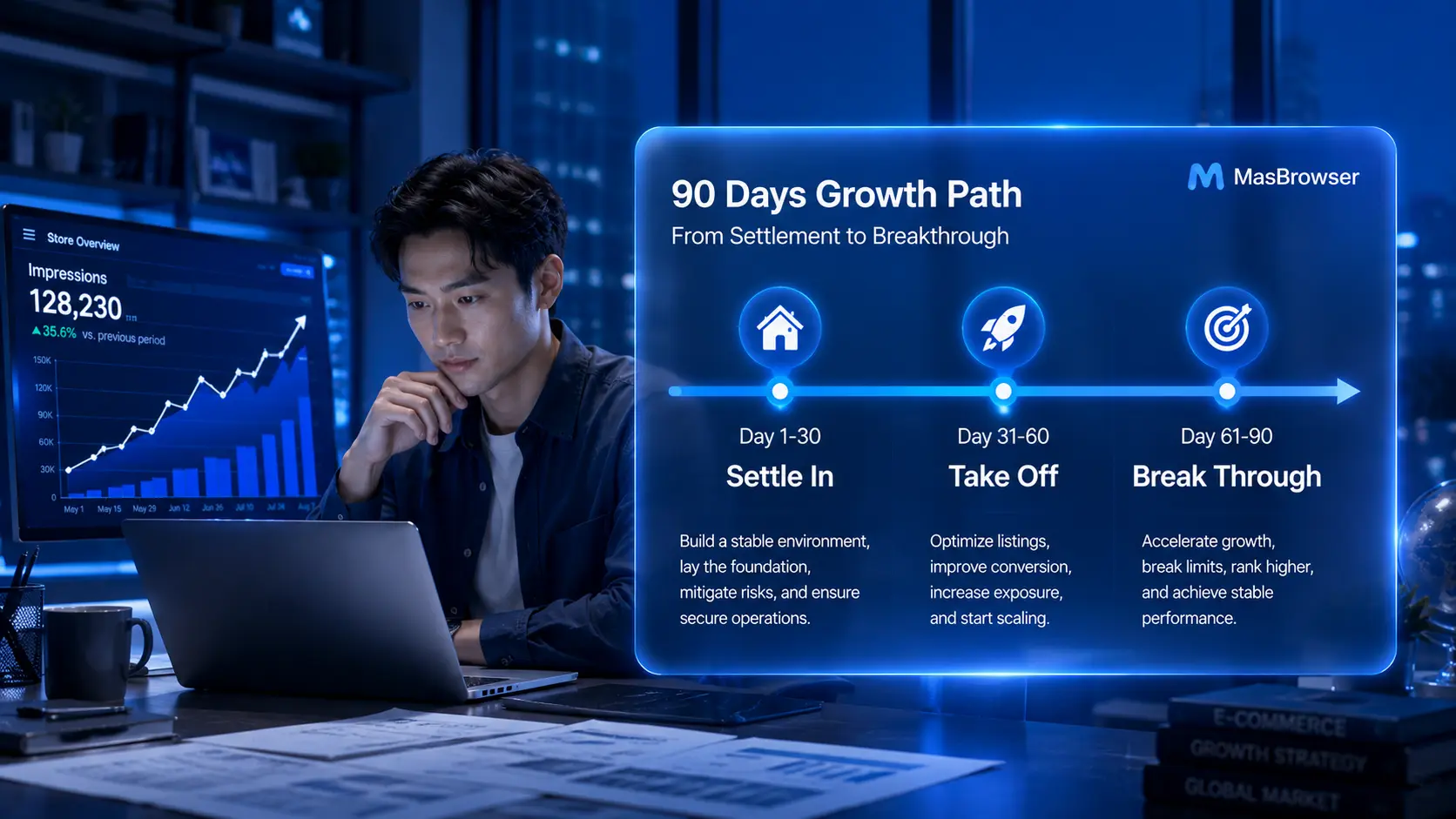
The Cold-Start Timetable: Days 1 Through 15
Split the nurturing period into four segments, each with a clear main task (the pacing below is community-tested practice; adjust the day counts elastically based on how each account behaves):
- Days 1-3: only "settle the environment". Set the environment up before registering — independent browser environment, dedicated proxy, language and timezone matching the proxy region; in these days after signup only scroll, don't change: browse For You, watch lives; no bio, no avatar, no extra bindings. Editing a pile of profile info on registration day is the number-one killer of new accounts.
- Days 4-7: imitate a real user. Keep 1-2 hours of natural daily usage: watch videos to the end before swiping on (completion is the strongest "interested in content" signal), like what genuinely interests you, occasionally search a topic word. Actions need spacing — a real person doesn't like every 10 seconds.
- Days 8-14: light-interaction period. Start leaving a few comments (natural short phrases, not ad-speak), follow a batch of accounts in your niche, and you can fill in the profile now (avatar, nickname, bio all at once, then stop fiddling). Still no videos, no links.
- Day 15 onward: tentative operation. Post your first piece of content (original or a deep re-creation), watch the 24-hour view performance, and only scale up on a normal result; traffic-driving moves (link in bio, funnel copy) wait until account data stabilizes — one step at a time.
The timetable's core logic: trust is addition, violations are multiplication — every early step adds to the trust score, while any aggressive move (posting on day one, frequent IP switching) is a multiplicative penalty that resets everything.
The Nurturing Checklist: Do and Don't
The timetable lands in daily actions — two lists:
To do (simulate a real-person profile):
- Fixed daily usage window (say, two evening hours), matching the target region's daily rhythm rather than yours;
- Completion-first, likes second, comments less frequent than likes — that's how a real person's behavior pyramid is distributed;
- When same-niche content appears, linger longer so the recommendation system files your account under the target category — this decides the initial traffic pool for your future posts;
- Running multiple accounts: vary each account's usage window, category taste, and interaction habits — differentiation is the point.
Don't do (each one hands risk control evidence):
- Editing profile, posting, following dozens on day one — all postponed to their proper stage;
- Several new accounts sharing one environment, or following each other — environment isolation is the premise of everything (the setup of independent environments and proxies is fully covered in what is a fingerprint browser);
- Free proxies or constant proxy-region switching — IP history and stability directly decide how long the observation period lasts (the harm of free proxies is fully covered in are free proxy IPs safe);
- Flicking between "acceleration nodes" in a proxy tool during nurturing — one account, one stable exit, from start to finish.
Print the list and pin it to your desk: during nurturing, every action passes one test — "would a real user do this?"
Nurturing with MasBrowser: Environment Foundation, RPA Templates on Top
Manual nurturing is fine — but matrix players holding a dozen accounts can't scroll two hours per account each day. That's where MasBrowser's two layers map exactly to nurturing's two cores: the environment layer keeps you safe, the RPA layer raises efficiency.
Environment layer: one account, one environment, the foundation. Every new account gets an independent environment (independent fingerprint + dedicated proxy + independent cookies), with registration, scrolling, and interaction all happening inside — to the platform, each account is "one stable device in steady use," exactly the signal the system most wants to see during the observation period. The free tier's 2 environment quota is enough to nurture your two most important accounts on schedule.

RPA layer: the template library ships ready-made TikTok nurturing templates. Open "Automation → RPA tasks" in the left menu, enter the RPA marketplace, filter by TikTok, and you'll see four built-in templates:
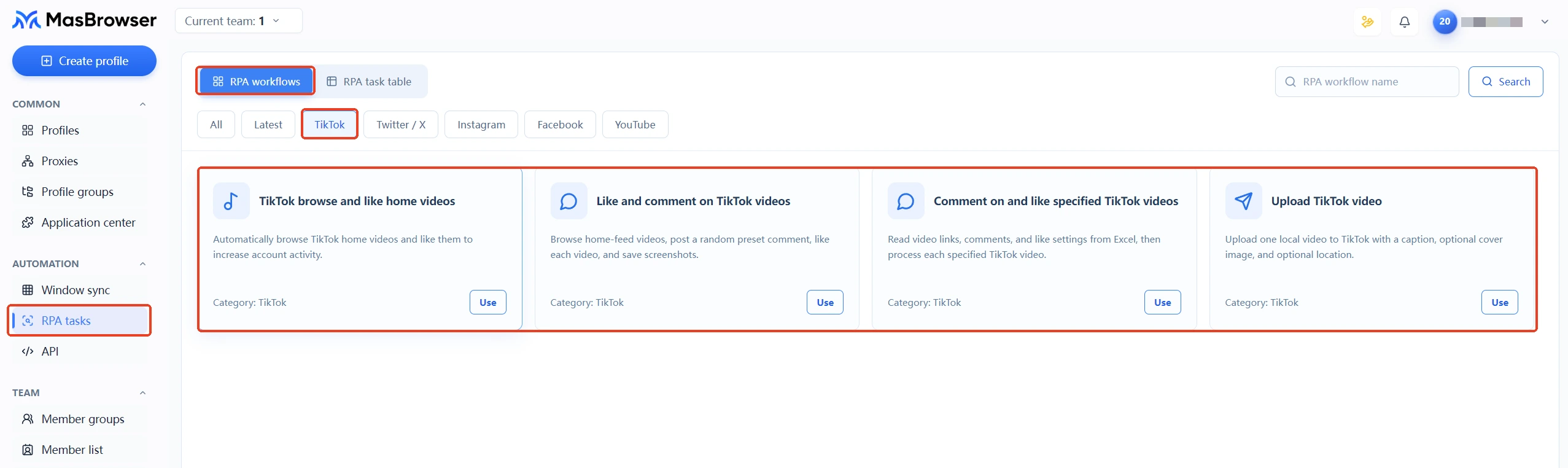
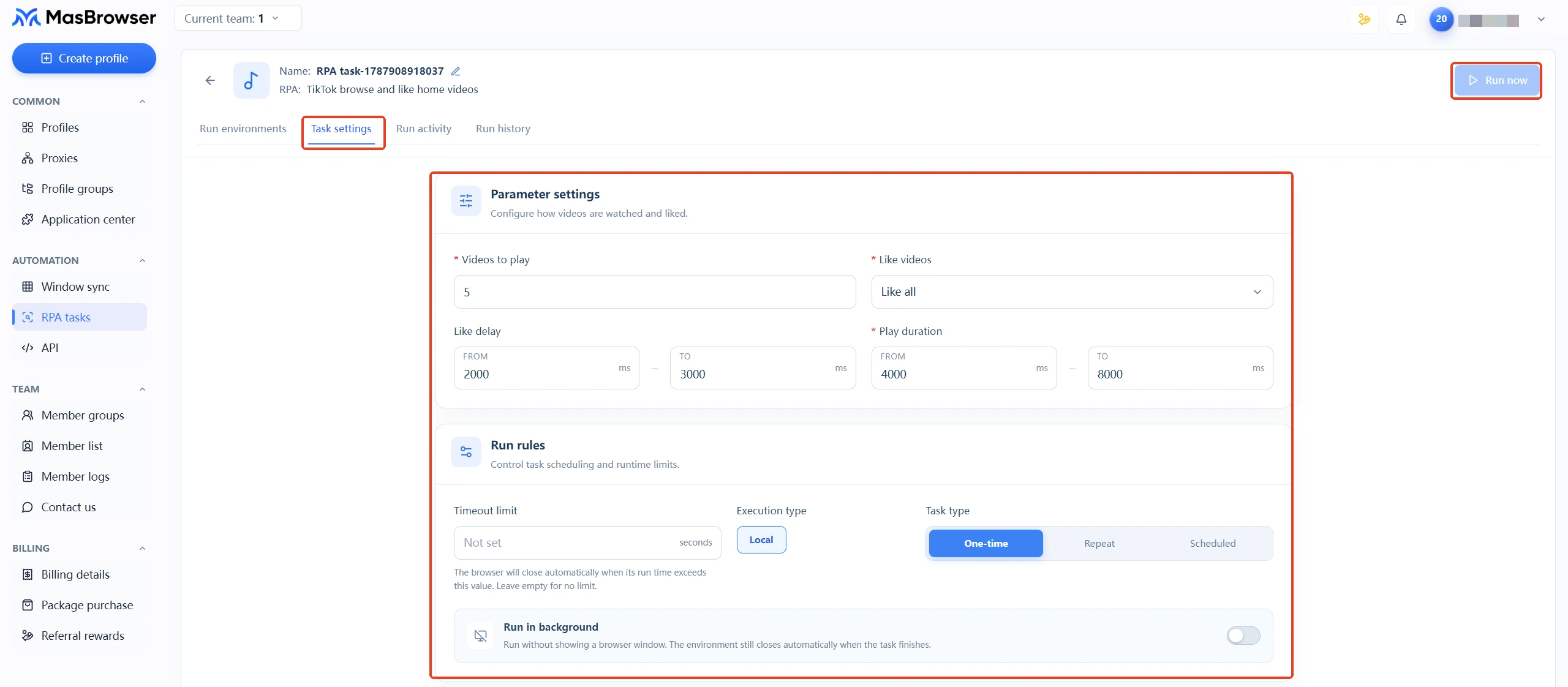
- TikTok browse / view homepage videos — automated browsing of the homepage that enters nurturing mode and mimics a real person scrolling TikTok — this is the workhorse of Days 4-7, the "imitate a real person" phase: set the number of videos and dwell time, and let it scroll naturally during your usage window;
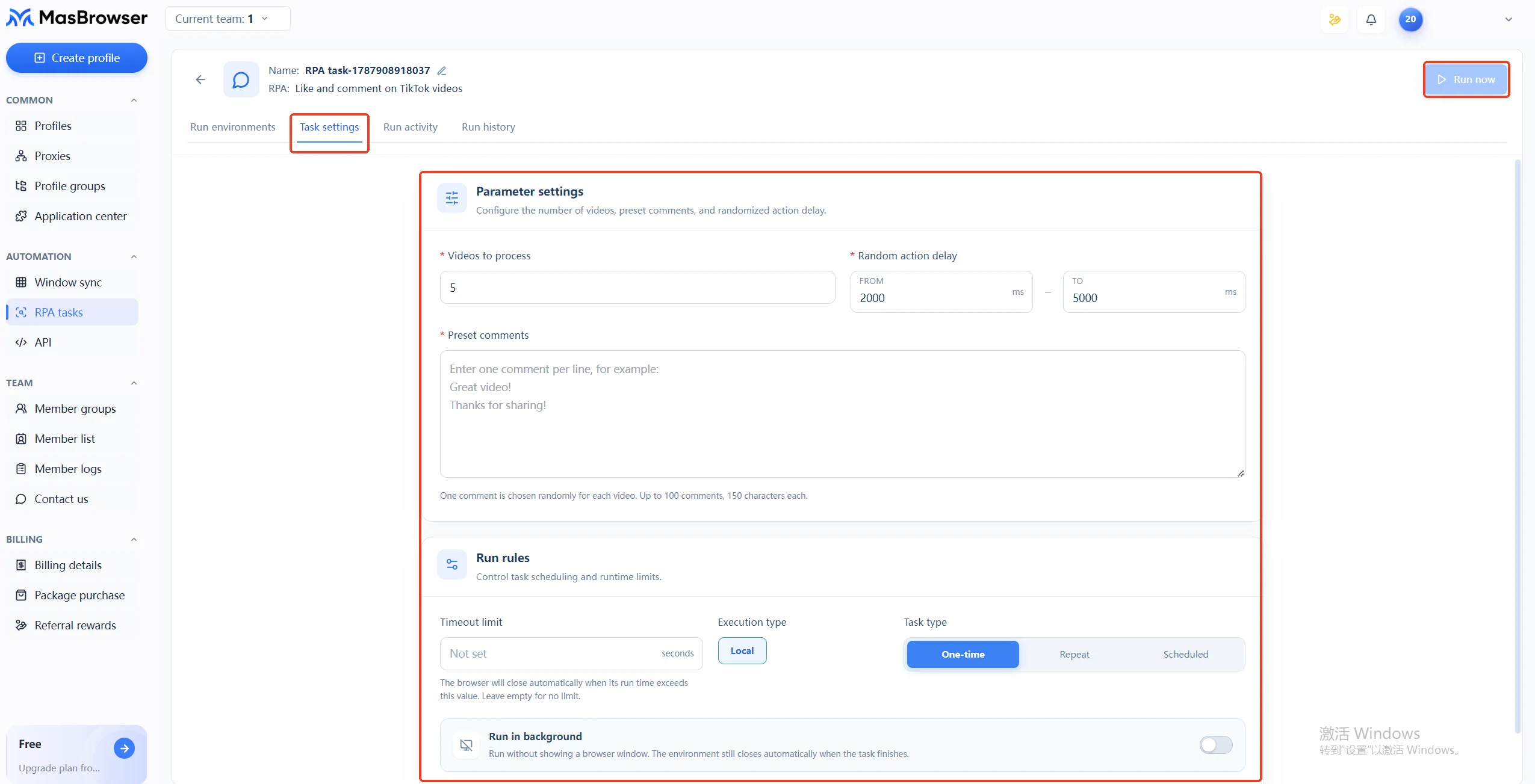
- TikTok like and comment on videos — automated homepage browsing with random viewing, liking, and commenting — for Days 8-14, the light-interaction period; turn the comment frequency parameter down to keep the "fewer comments than likes" real-person ratio;
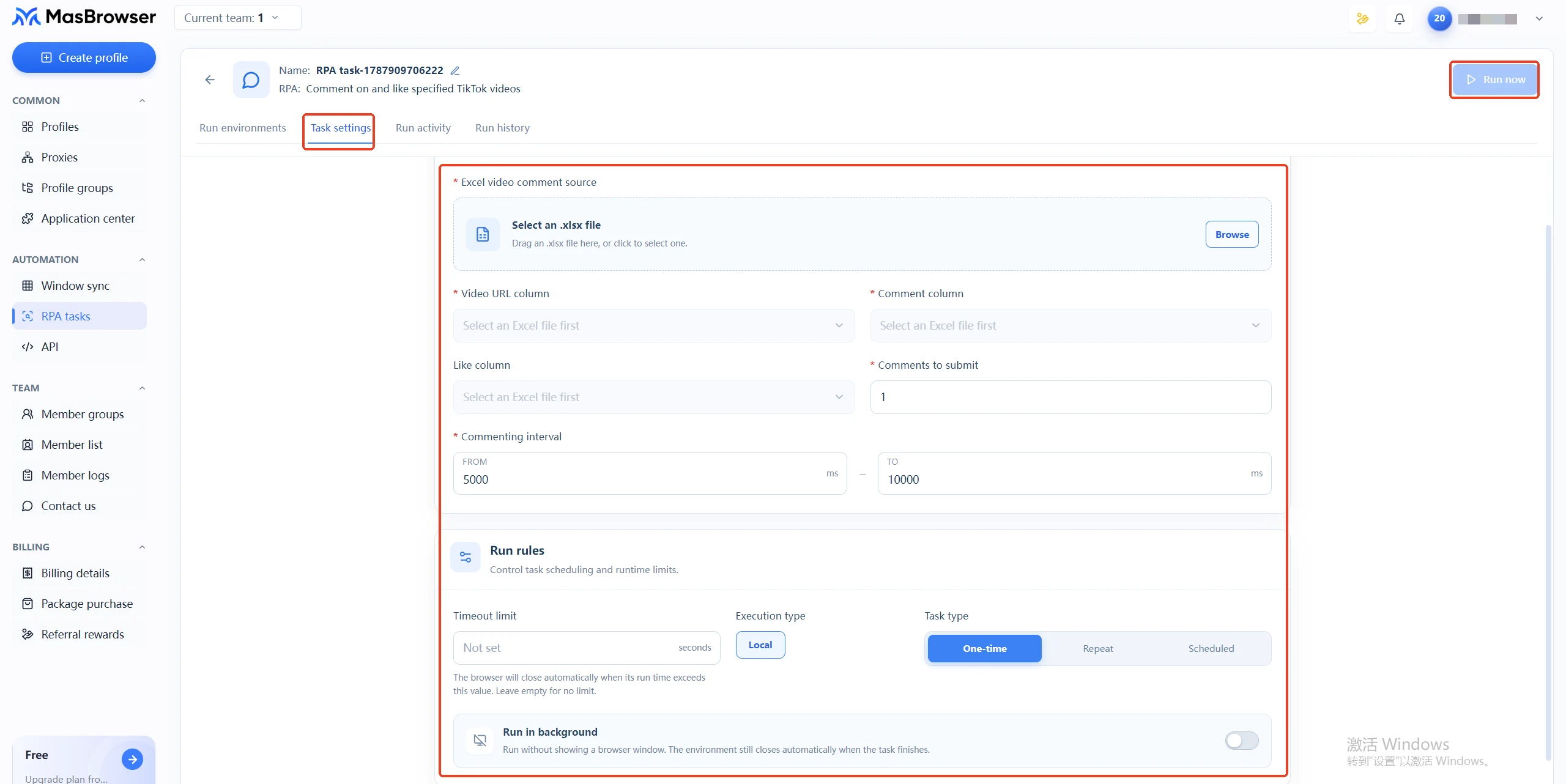
- TikTok like and comment on specified videos — likes and comments on a list of video links — for promotion during the operation phase; not used during nurturing;
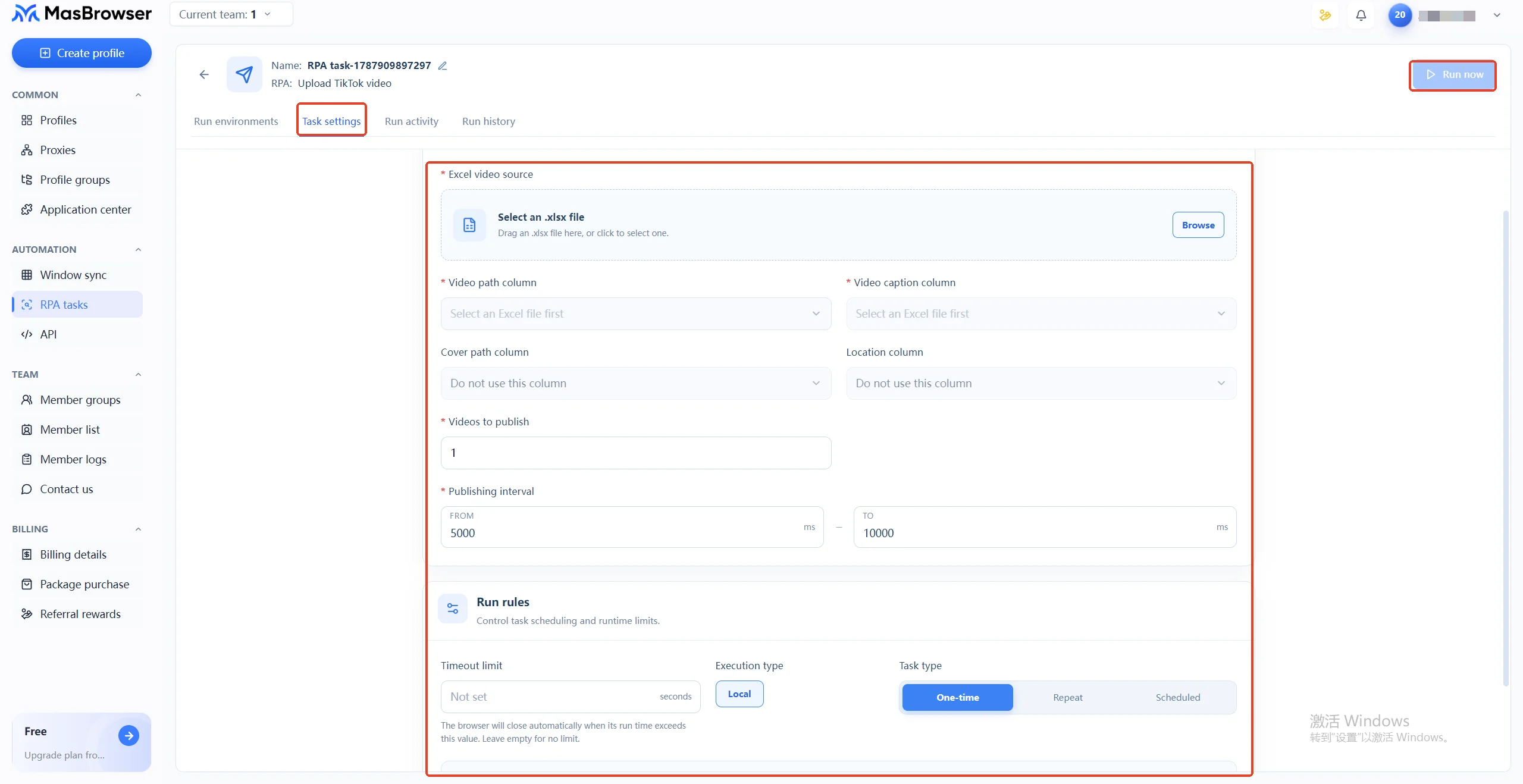
- Upload TikTok video — publish a local video — reserved for Day 15+ tentative operation, where your first test post can go out on schedule.
Rhythm mapped to the timetable (the four-step flow is fully explained in fingerprint browser RPA automation):
- Days 1-3: no automation at all — the environment-settling period; manual scrolling is the most stable in the first days after signup;
- Days 4-7: run the "browse / view homepage videos" template with ranges for video count, like delay, and play duration — randomized ranges are the key to mimicking a human rhythm; fixed values are what risk control detects;
- Days 8-14: add the "like and comment" template, run it low-frequency, stagger each account's usage window;
- Day 15+: once the account shows normal distribution, move to the "upload video" template and enter the operation phase.
One discipline: RPA executes the rhythm; it doesn't set it — first decide, per the timetable, what "a real person would do" in each stage, then let the templates execute; let automation set the pace instead and you'll raise a batch of accounts whose behavior is suspiciously uniform.
How Do You Know the Account Is "Nurtured"? Four Signals
Don't judge by gut feeling — watch these four observable signals:
- For You is localized: the feed is dominated by the target region's language and categories — the system has filed you under that market's user profile;
- Browsing and interaction run unblocked: likes, comments, and follows all go through, no more captchas or "action restricted" notices;
- The first test post gets normal distribution: within 24 hours it earns 200-500+ base views (the number isn't gospel — the point is "it's being distributed," not "lying on your own profile");
- Profile edits no longer trigger verification: changing the bio or avatar leaves the account stable.
All four lit, the account has finished its cold start and enters normal operation — but "nurtured" doesn't mean "free to go wild": the operation phase still demands restraint (daily post caps, traffic-driving ratios and other operating discipline are covered generically in multi-account nurturing and ban prevention).
The Four Moves That Kill New Accounts
Post-mortems of countless failures converge on these four:
- Death one: the day-one "three-piece set" — edit profile, post videos, follow a wave, all in one go. System's view: a textbook marketing-account workflow. Fix: follow the timetable strictly; the first 3 days are scrolling only.
- Death two: registering before the environment is stable — signup on the local network, proxy and environment added later; the IP has been "drifting" since the moment of registration. Fix: environment first — proxy and fingerprint stable, then register.
- Death three: multiple accounts in one environment following each other — ten new accounts registered in one environment and mutually following is holding hands in front of the platform saying "we're a gang." Fix: one account, one environment; "social association" like mutual follows must never happen between your own accounts.
- Death four: can't resist posting during nurturing — "it's been a week, surely it's fine now" — any proactive content or traffic move inside the observation period zeroes out everything accumulated.
The common thread of the four deaths is impatience: the nurturing period tests not technique but patience — accounts are assets, and the most expensive cost of building an asset is time; accounts that skip time can't pay it back.
FAQ
How many days does nurturing a new TikTok account usually take?
Community experience centers on about 14 days: the first 7 watch-only, days 8-14 light interaction, day 15 onward tentative posting. It's not a hard number — well-behaved accounts can shorten it, accounts that triggered verification extend it — judge by the signals, not by stubbornly counting days.
Do I have to post videos during the nurturing period?
No — not in the first two weeks. Posting is "creator behavior," and a brand-new account jumping straight into the creator role is a classic marketing-account trait; accumulate trust as a viewer first, then appear after day 15 as "a creator just getting started" — a far more natural path.
How many accounts can one environment nurture at once?
One account per environment is the safe ceiling. Multiple new accounts sharing an environment share device traits and IP reputation — one account goes down, every account in that environment goes down with it. Multi-account needs are met by building independent environments one by one (the free tier's 2 environment quota lets you nurture your two most critical accounts first).
Should a new account bind an email or phone number right away?
Bind soon after the first few days, but email takes priority over phone: phone numbers are heavily reused (a number that has registered multiple accounts becomes a liability), while a clean, dedicated email is the safer binding choice. Do the binding on days 4-7, together with the profile completion.
Is RPA-automated nurturing reliable?
As an aid, yes — with restraint: low-frequency browsing and liking driven by automation that mimics human rhythm (random delays, staggered windows across accounts) is common industry practice, but fully unattended automation is where things go wrong en masse — for key new accounts, nurture manually for the first two weeks, and only hand repetitive actions to automation after a stable "persona template" has emerged (the RPA workflow and its pitfalls are fully covered in the on-site RPA article).
Conclusion
The cold start of a new TikTok account is, in the end, an exam titled "prove you're human through behavior": days 1-7 settle in and only scroll, days 8-14 interact lightly, day 15 onward operate tentatively — and only when all four "nurtured" signals light up do you officially enter the operation phase.
Two principles run through it all: environment first (independent environment and stable proxy should be in place before registration, not patched in after trouble); restrained rhythm (trust accumulates by addition, and every aggressive move is a multiplicative penalty). Matrix players especially should treat each new account's cold start as its own project — one account's impatience can cost you the whole batch.
If you're about to start your first batch, get the environment stable before registering — download MasBrowser, use the free tier's 2 environment quota, and start nurturing your first two accounts on schedule today.